Quapri
Bigger Orders, Bigger Savings! Flat 5% OFF on ₹10,000+ Orders | Code: SAVE5
Shopping cart

No products in the cart.

RETURN TO SHOP
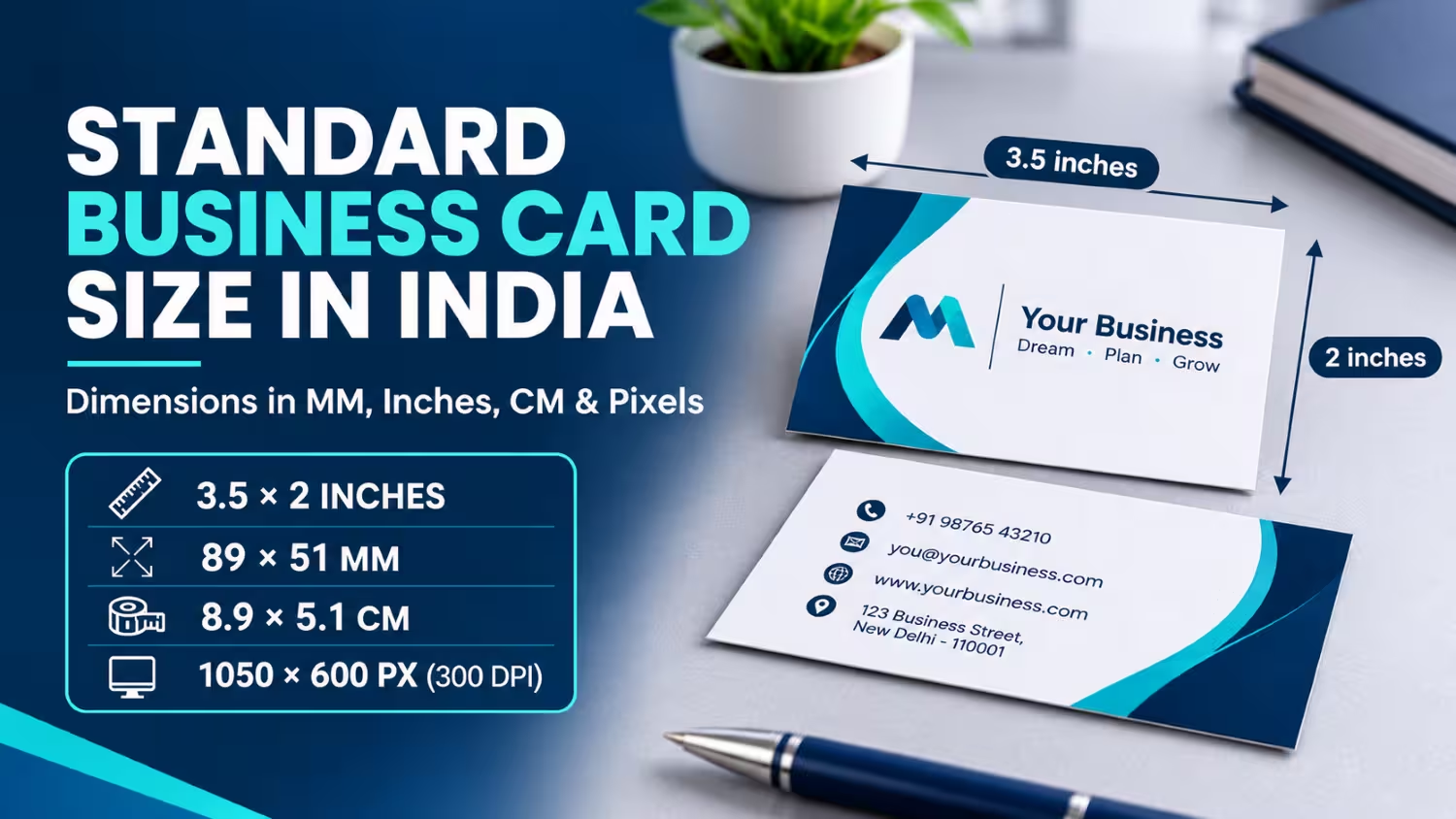
Infographic showing standard business card size in India as 3.5 x 2 inches, 89 x 51 mm, with dimensions displayed.
Articles•4 November 2026•By

Business Card Size in India: mm, cm, Inches & Pixels

Business Card Size Guide: Standard Dimensions in India, MM, Inches and Pixels The standard business card size in India is

Business Card Size Guide: Standard Dimensions in India, MM, Inches and Pixels

Infographic showing standard business card size in India as 3.5 x 2 inches, 89 x 51 mm, with dimensions displayed.

The standard business card size in India is 3.5 × 2 inches (89 × 51 mm). This is also a commonly used visiting card size for personal and business branding. For printing, the same dimensions are approximately 8.9 × 5.1 cm or 1050 × 600 pixels at 300 DPI.

The right business card size gives enough space for your name, contact details, company logo and other important information without making the design look crowded. Here is a guide to standard business card dimensions, different card styles and the measurements to use when preparing your artwork for printing.

Standard Business Card Size in India

In India, a commonly used standard business card size is 3.5 × 2 inches. It is suitable for most professional and corporate visiting cards.

Here is a quick reference to standard business card dimensions:

Measurement Width Height
Inches 3.5 in 2 in
Millimetres (mm) 89 mm 51 mm
Centimetres (cm) 8.9 cm 5.1 cm
Pixels at 300 DPI 1050 px 600 px

Note: Pixel dimensions represent the approximate finished card size at 300 DPI. Additional artwork space is required for bleed.

Whether you are preparing artwork for printing, selecting a visiting card for your business or comparing international card sizes, understanding the correct dimensions helps you create a properly sized and print-ready design.

Standard Business Card Sizes in Different Countries

Business card dimensions vary across countries. India and the USA commonly use a 3.5 × 2-inch format, while the UK, Europe and Japan follow slightly different measurements.

Country Size in inches Size in mm Pixels at 300 DPI
India 3.5 × 2 89 × 51 1050 × 600
USA and Canada 3.5 × 2 89 × 51 1050 × 600
UK and Europe 3.35 × 2.17 85 × 55 1004 × 650
Japan 3.58 × 2.17 91 × 55 1075 × 650

These are commonly used dimensions, not mandatory sizes for every business. Always confirm the required dimensions with your printing provider before submitting your design.

Different Types of Business Card Sizes

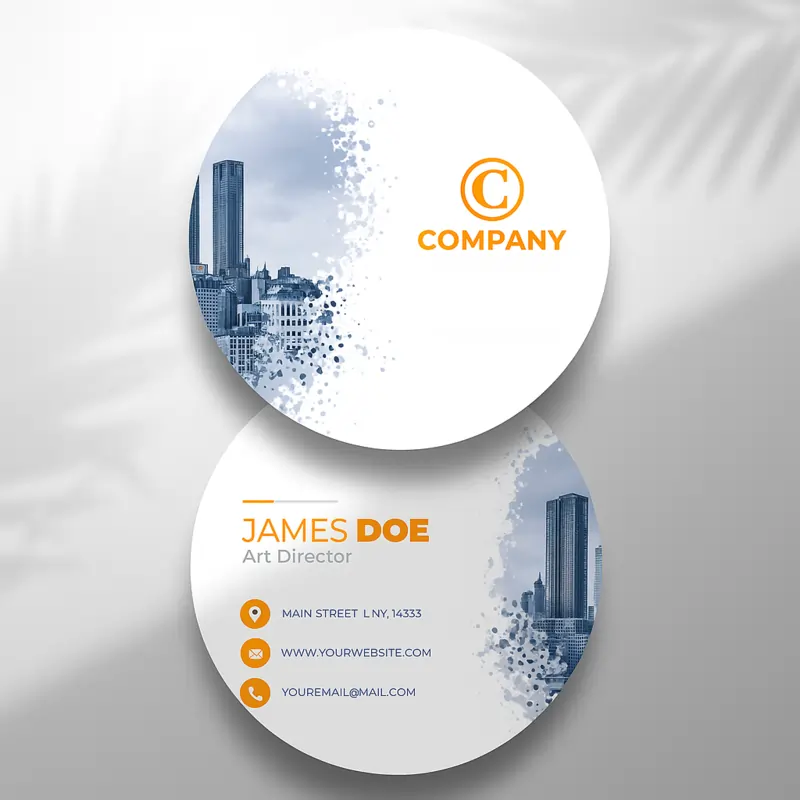
Apart from the standard rectangular format, business cards are available in different shapes and dimensions. The choice depends on the design, amount of information and branding requirements.

1. Standard Business Cards

The standard business card measures 3.5 × 2 inches (89 × 51 mm). It provides space for essential details such as your name, designation, company name, phone number, email address and logo.

This size is commonly used by professionals, small businesses, corporate teams and organisations.

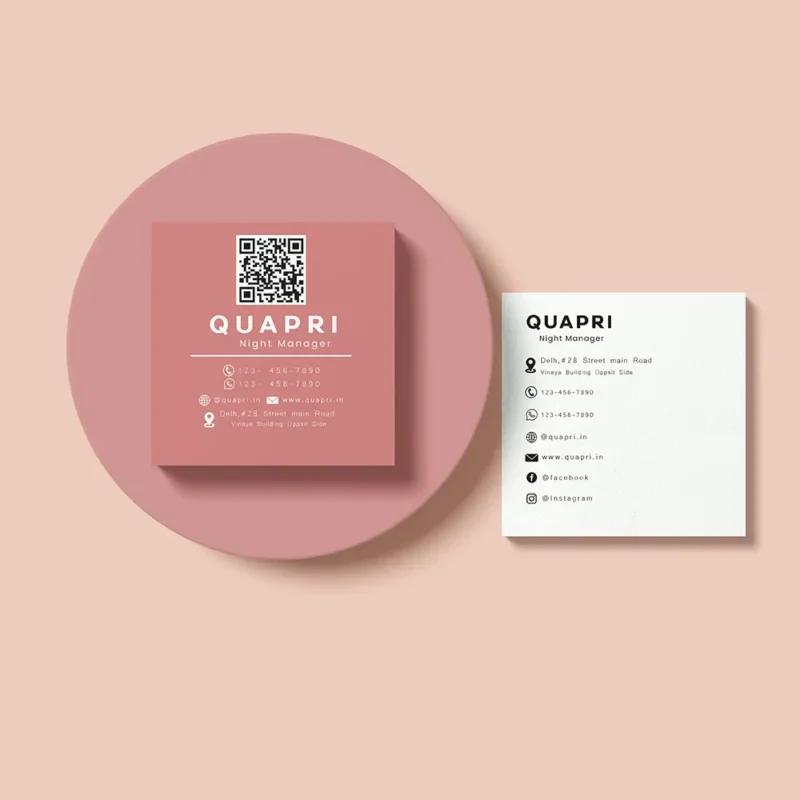
2. Square Business Cards

Square business cards have equal width and height, giving them a different look from traditional rectangular cards.

A commonly used example is 2.5 × 2.5 inches (64 × 64 mm). The actual dimensions can vary depending on the design and printing requirements.

Square cards can work well for creative businesses, personal branding and designs that use a simple layout.

3. Mini Business Cards

Mini business cards are smaller than standard cards. They are useful when you want a compact format with only essential information.

One example is 3 × 1.5 inches (76 × 38 mm). Since the available space is limited, keep the content simple and make sure the text remains readable.

4. Slim Business Cards

Slim business cards have a narrow rectangular shape. An example size is 3.5 × 1.5 inches (89 × 38 mm).

They offer a different layout for businesses that prefer a compact design. Before selecting this format, check that your logo and contact details fit comfortably.

5. Folded Business Cards

Folded business cards have an additional panel that provides more space for information. They can be used when you need to include details beyond the usual name and contact information.

A folded card may have the following dimensions:

  • Closed size: 3.5 × 2 inches (89 × 51 mm)
  • Open size: 3.5 × 4 inches (89 × 102 mm)

These are example dimensions. The finished and open sizes depend on the folding direction and design.

6. Die-Cut and Custom-Shaped Business Cards

Die-cut business cards are made in custom shapes instead of the usual rectangular format. They can be designed around a brand logo, product shape or specific visual idea.

There is no fixed size for these cards. The dimensions depend on the chosen shape, artwork and production requirements.

Quick Comparison of Different Business Card Sizes

Use this table to compare the common business card formats before choosing a size.
Business card typeSize in inchesSize in mm
Standard3.5 × 289 × 51
Square2.5 × 2.564 × 64
Mini3 × 276 × 51
Slim3.5 × 1.589 × 38
Folded (closed)3.5 × 289 × 51
Folded (open)3.5 × 489 × 102
Die-cut / Custom-shapedVariesVaries

Note: Sizes mentioned for square, mini, slim and folded cards are examples, not fixed industry standards. Custom dimensions depend on printing requirements.

Business Card Dimensions in Pixels at Different DPI

When designing a visiting card digitally, you may need to enter the width and height in pixels instead of inches or millimetres. For a standard 3.5 × 2-inch business card, the pixel dimensions change according to the DPI (dots per inch) setting.

Here is a quick reference:

ResolutionWidthHeight
72 DPI252 px144 px
150 DPI525 px300 px
300 DPI1050 px600 px
600 DPI2100 px1200 px

300 DPI is a commonly used resolution for print artwork. It provides sufficient detail for clear text, logos and graphics at standard business card size.

A higher DPI does not change the physical dimensions of the card. It increases the number of pixels used to represent the same printed area.

Bleed, Trim Size and Safe Area for Business Cards

When preparing a business card for printing, the finished card size is not the only measurement to consider. You should also account for bleed, trim and safe areas.

  • Trim size: The final dimensions of the card after cutting. For a standard Indian business card, this is 89 × 51 mm.
  • Bleed area: Extra artwork that extends beyond the trim edge to prevent unwanted white borders if the cutting position varies slightly.
  • Safe area: The inner area where important text, logos and contact details should remain to avoid being cut off.

For example, if your finished business card size is 89 × 51 mm and the required bleed is 3 mm on each side, the artwork size becomes 95 × 57 mm.

Area Width Height
Finished card size 89 mm 51 mm
Bleed on each side 3 mm 3 mm
Total artwork size 95 mm 57 mm
Bleed and margin guide for visiting card printing, showing bleed area, final trim size, and safe margin dimensions.

The bleed requirement may vary depending on the printing provider. Confirm the required artwork dimensions before submitting your file.

Business Card Design and Printing Guidelines

A good business card design should be easy to read and should present your business details clearly. Keep these points in mind when preparing your artwork.

1. Keep the Important Details Readable

Include only the information people need to contact you or understand your business. Common details include:

  • Name and designation
  • Company or brand name
  • Phone number
  • Email address
  • Website or business address, where required
  • Company logo

Avoid adding too much information, as it can make the card look crowded.

2. Use a Readable Font Size

Choose font sizes that remain clear when the card is printed at its actual size. Small text can become difficult to read, especially when the design includes several contact details.
Give more visual importance to the person's name and company name while keeping supporting information easy to read.

3. Check the Logo and Artwork Quality

Use a high-resolution logo and clear artwork. Vector formats such as AI, CDR and SVG are useful for maintaining sharp edges when resizing. High-resolution PDF and image files can also be used, depending on the printing requirements.

4. Maintain Proper Spacing

Keep sufficient space between text, logos and other design elements. Avoid placing important information too close to the edges.

5. Check the Final Dimensions Before Printing

Confirm the card size, orientation, bleed and file resolution before submitting your artwork. This helps avoid layout and trimming issues during production.

How to Choose the Right Business Card Size

The right size depends on how you want to present your business and how much information you need to include.

  • For regular professional use: Choose the standard 3.5 × 2-inch format.
  • For a different visual style: Consider a square or slim format.
  • For additional information: A folded card provides more space than a standard card.
  • For distinctive branding: Consider a custom-shaped design, provided the layout is practical for printing.

If you are unsure which size to use, the standard format is a practical starting point for most business and corporate visiting cards.

Why Choosing the Correct Business Card Size Matters

Business card dimensions affect how the design looks, how easily people can read the information and how the card can be carried or stored.

Choosing a suitable size helps you:

  • Present contact details clearly.
  • Maintain a balanced layout.
  • Keep logos and text properly positioned.
  • Prepare artwork that matches printing requirements.
  • Create a consistent look across your business stationery.

A well-planned design and the correct dimensions help make your business card useful for everyday professional interactions.

Frequently Asked Questions About Business Card Size

What is the standard business card size in India?

The commonly used standard business card size in India is 3.5 × 2 inches, approximately 89 × 51 mm or 8.9 × 5.1 cm.

What is the standard visiting card size in inches?

The standard visiting card size commonly used in India is 3.5 inches wide and 2 inches high.

What is the standard visiting card size in mm?

The commonly used Indian visiting card size is approximately 89 × 51 mm.

What is the standard business card size in pixels?

At 300 DPI, a standard 3.5 × 2-inch business card requires an artwork size of 1050 × 600 pixels, excluding bleed.

What is the square business card size in inches?

A commonly used square business card size is 2.5 × 2.5 inches, approximately 64 × 64 mm. Other custom dimensions are also possible.

What is the visiting card ratio?

A standard 3.5 × 2-inch visiting card has an aspect ratio of 1.75:1. This means the width is 1.75 times the height.

How many business cards fit on a printing sheet?

The number of business cards that fit on a sheet depends on the sheet dimensions, card size, spacing, bleed and printing layout. Your printing provider can confirm the suitable layout for the required quantity.

Get Your Business Cards Printed with Quapri

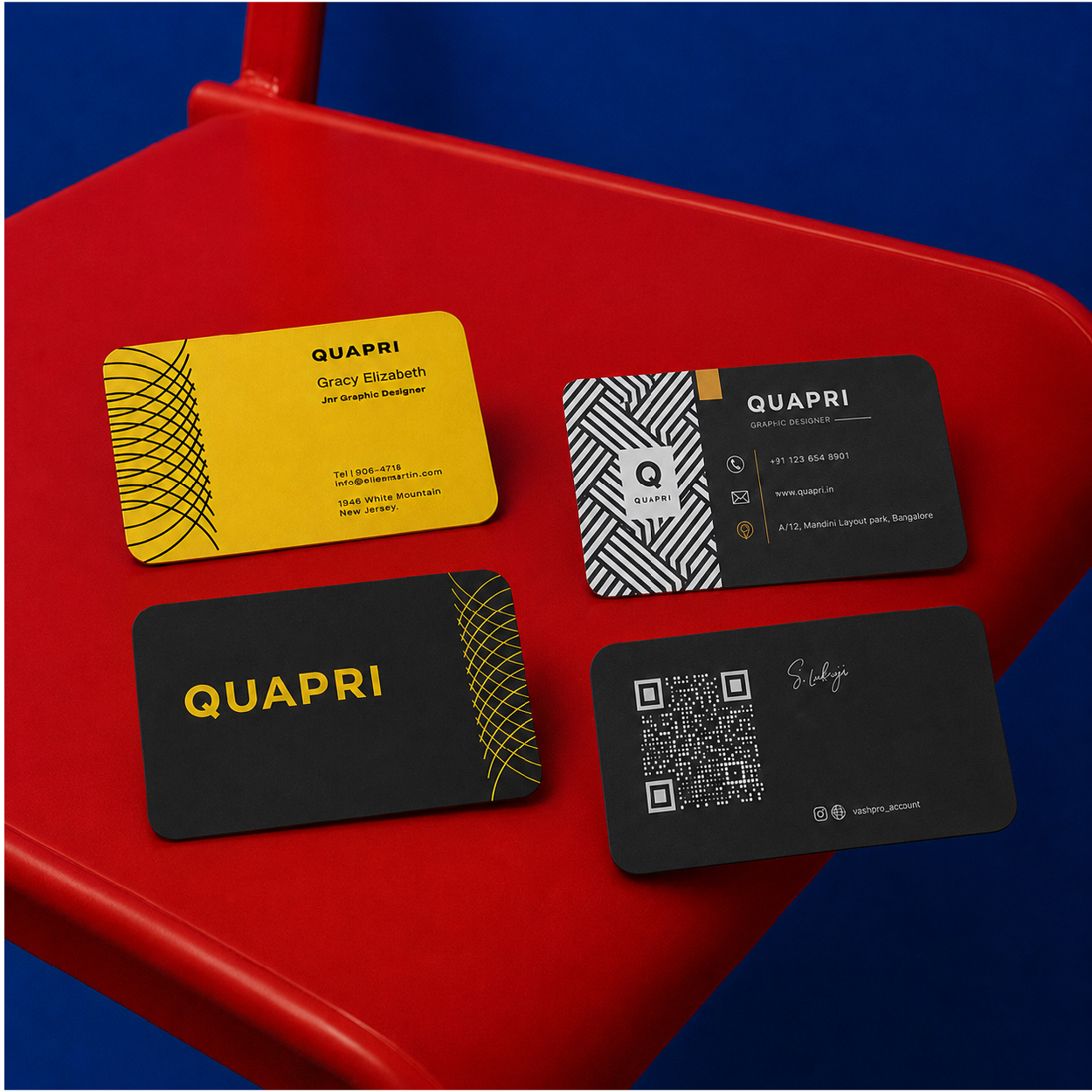
Once your design and dimensions are ready, choose the printing specifications that suit your requirements. Whether you need business cards for personal use, employees or corporate branding, make sure the final artwork follows the required size and print guidelines.

Explore the quapricatalogue to discover more custom printing and branding products.

Explore our full range of Visiting Cards