How Does Offset Printing Work?
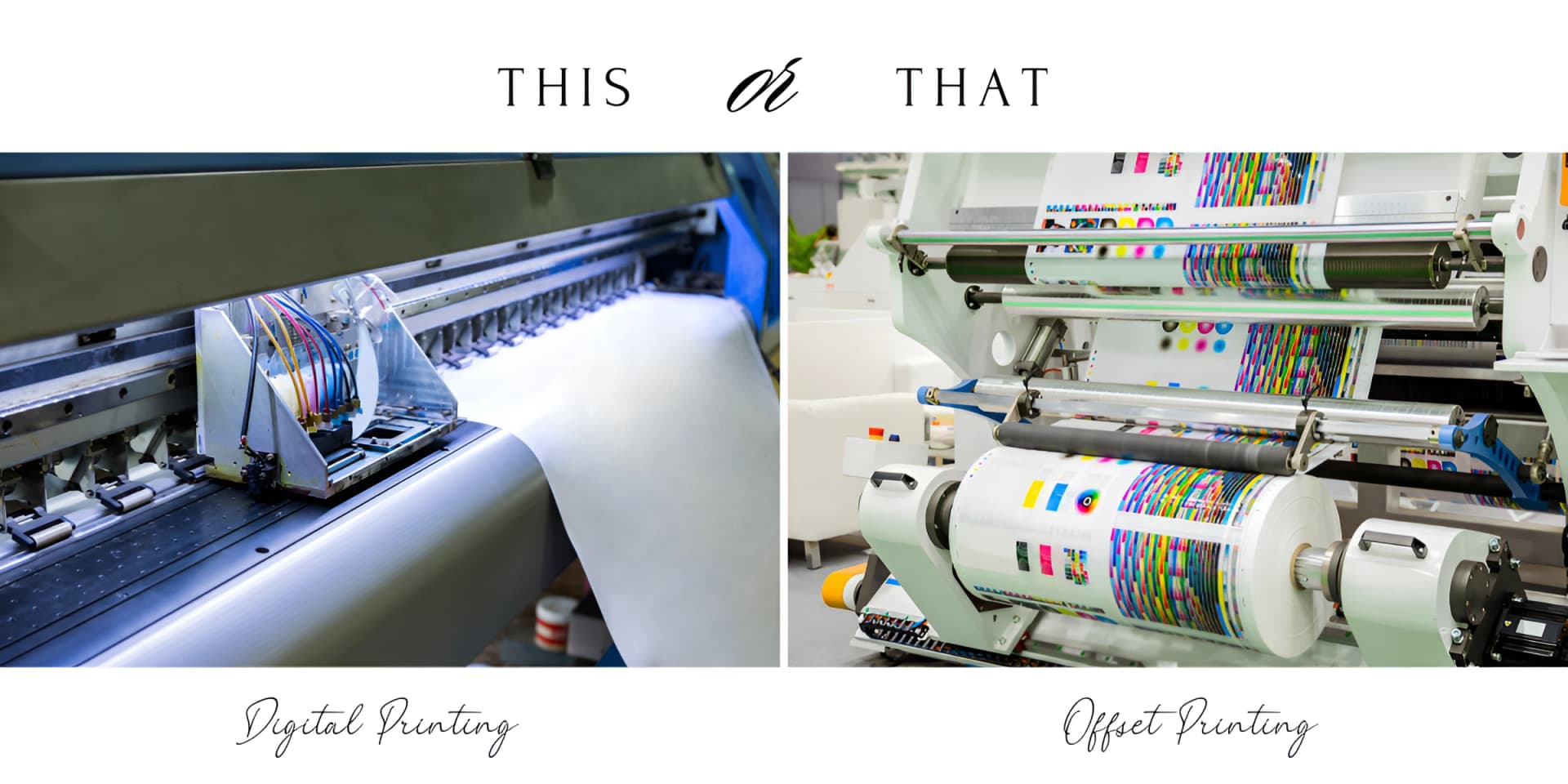
The process may sound technical, but it’s actually quite systematic:
- First, your design is transferred onto thin metal plates.
- Ink sticks only to the image areas on those plates.
- The image is first transferred from the metal plate onto a rubber blanket.
- After that, the rubber blanket applies the inked image evenly onto the paper.
This indirect printing method helps maintain high quality and consistency, especially when printing thousands of copies.
Benefits of Offset Printing
There’s a reason why offset printing is widely used for commercial projects. Here are some key advantages:
- Excellent and accurate color reproduction
- Perfect choice for bulk printing
- Lower cost per piece when printing large quantities
- Sharp, clean, and professional finish
- Consistent color quality across thousands of prints
When quality and quantity both matter, offset printing performs very well.
Digital vs Offset Printing Comparison Table
Feature | Digital Printing | Offset Printing |
Printing Process | Direct printing from digital file to paper | Uses metal plates and rubber blanket to transfer ink |
Setup Cost | Low setup cost (no plates required) | High setup cost due to plate creation |
Cost for Small Quantity | More affordable for short runs (50–500 copies) | Expensive for small quantities |
Cost for Large Quantity | Higher cost per piece in bulk | Very cost-effective for bulk printing |
Print Quality | High quality, suitable for most projects | Superior quality with sharp details and smooth gradients |
Color Accuracy | Good color output | Excellent color consistency and Pantone matching |
Turnaround Time | Fast production time | Longer setup time before printing starts |
Customization | Easy variable data printing (names, numbers, QR codes) | Limited personalization options |
Best Use Case | Business cards, short-run brochures, personalized prints | Magazines, catalogs, packaging, bulk brochures |
When to Use | Urgent projects and small quantity orders | Large volume printing with consistent brand colors |
Digital vs Offset Printing: Key Differences
Let’s compare both methods in simple terms.
1. Cost Comparison
- Digital Printing:Low setup cost because there are no plates required, which makes it affordable for small orders. However, the cost per piece remains almost the same even if the quantity increases. This means digital printing becomes expensive when printing in bulk..
- Offset Printing: High initial setup cost due to plate creation and machine setup. But once the setup is complete, the cost per piece reduces significantly for large quantities. That’s why offset printing is more economical for bulk printing projects..
If you print 100 brochures, digital is cheaper.
If you print 10,000 brochures, offset is more cost-effective.
This is why many businesses ask: which is better digital or offset printing? The answer depends on quantity.
2. Print Quality Comparison
When comparing offset printing vs digital printing quality, both methods deliver professional results, but there are some noticeable differences. Offset printing generally offers smoother color gradients and sharper image details, making it ideal for high-end marketing materials. The colors produced through offset printing are more accurate and consistent, especially when using Pantone shades, which helps maintain brand color standards across large print runs. On the other hand, digital printing quality is also very good and suitable for most business needs. However, for extremely large batches, digital prints may show slight variations in color consistency compared to offset printing..
For premium branding materials, offset printing usually wins in the offset printing vs digital printing quality debate.
3. Turnaround Time
In the digital vs offset printing comparison, digital printing is faster because it does not require plate setup. Offset printing takes more time since plates must be prepared before printing begins, making it slightly slower for urgent orders.
If you need urgent printing within 1–2 days, digital printing is ideal.
4. Customization & Personalization
Digital printing supports variable data printing, allowing you to customize each piece with personalized names, unique QR codes, or serial numbers. This makes it ideal for targeted marketing and personalized materials. In contrast, offset printing is not suitable for easy customization since it uses fixed printing plates for bulk production.
Offset printing does not easily support personalization.
Which is Better Digital or Offset Printing?
There is no single winner in the digital vs offset printing debate.
Digital Printing is Better If:
Choose digital printing if you need a small number of copies, want your prints ready quickly, or need personalized details like names or unique codes on each item. It is simple, fast, and perfect for customized printing.
Offset Printing is Better If:
Choose offset printing when you need to print a large number of copies at once. It is a good option if you want very high-quality printing with sharp images and smooth colors. It is also best when you need your brand colors to match perfectly and stay consistent in every print.
So instead of asking “which is better digital or offset printing,” the right question is:
👉 What is better for your specific project?
Offset Printing vs Digital Printing Quality: Final Thoughts
When comparing offset printing vs digital printing quality, both offer professional results. But:
- Offset provides smoother color gradients.
- Digital provides quick and flexible printing.
- Offset ensures long-run consistency.
- Digital allows easy corrections before printing.
Technology has improved so much that digital printing quality is now very close to offset for most everyday marketing materials.
Digital vs Offset Printing – Make the Smart Choice for Your Business
Understanding digital vs offset printing helps you make smarter business decisions. Both methods have advantages and limitations.
If you need:
- Fast, small, personalized printing → Choose Digital Printing
- Bulk, high-quality, brand-consistent printing → Choose Offset Printing
The choice between offset vs digital printing should depend on:
- Quantity
- Budget
- Timeline
- Quality expectations
By knowing when to use offset printing and when digital works better, you can save money and get the best results for your business. Before placing your next print order, evaluate your needs carefully. That’s the smartest way to decide between digital vs offset printing.
Explore our QuapriCatalogue.com to discover a wide range of digital and offset printing options tailored for your business needs. Browse now and pick the perfect solution!