




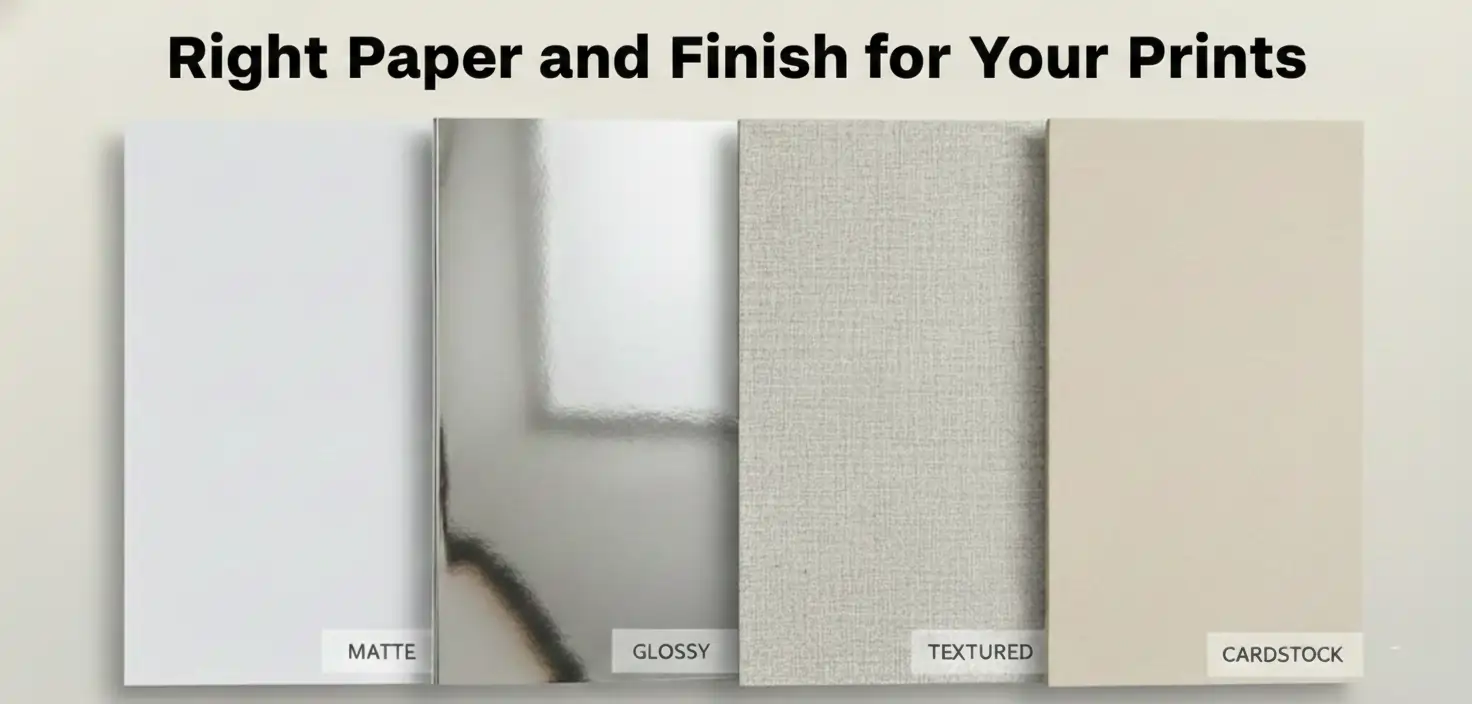
How to Choose the Right Paper and Finish for Your Prints
How to Choose the Right Paper and Finish for Your Prints When it comes to printing, the quality of your

When it comes to printing, the quality of your final product depends largely on the materials you choose. Picking the right Paper and finish for prints, along with the best printing paper types and coating options, can make a big difference in how your design, message, or artwork is perceived. Whether you’re printing business cards, brochures, flyers, or posters, knowing the different paper textures, thickness and finishing techniques helps your prints look professional, last longer and make a strong impression. In this guide, we’ll explain everything you need to know to choose the perfect print paper and finish for your projects.
Why Paper and Finish Matter?
Paper isn’t just the surface for your content—it plays a big role in how your printed materials are perceived. The type of paper you choose affects several important things:
- Appearance: Glossy paper makes colors stand out, while matte paper gives a more elegant, subtle look. Choosing the right print finish enhances the visual appeal of your brochures, flyers, and business cards.
- Durability: Thick, high-quality printing paper lasts longer and handles wear and tear better.
- Touch and Feel: The texture of your paper influences how people experience your brand materials or artwork.
- Printing Compatibility: Certain designs or printing techniques work best on specific paper types.
Types of Paper
1. Matte Paper
Matte paper is a type of printing paper with a smooth, non-shiny surface. It reduces glare, making text, images and fine details easy to read. Matte paper gives a classic and professional look, making it perfect for brochures, business reports, flyers, photographs and marketing materials. Colors may look a little muted, so it’s not ideal for bright, high-contrast images or colorful designs.
2. Glossy Paper
Glossy paper is a type of printing paper with a shiny, reflective surface that makes colors brighter and images more vibrant. It’s ideal for photo prints, flyers, brochures and promotional materials where visuals need to stand out. Glossy paper is perfect for designs that rely on bold colors and eye-catching graphics. However, it can easily show fingerprints and smudges, and glare may make reading text difficult.


3. Satin or Semi-Gloss Paper
Satin or semi-gloss paper is a type of printing paper that strikes a balance between matte and glossy finishes. It provides a subtle shine, giving your images and colors a vibrant look without too much reflection. This paper is professional and versatile, making it ideal for magazines, flyers, brochures and marketing materials. While colors may be slightly less vibrant than full-gloss paper and it can still show fingerprints, satin paper is a great choice when you want a polished, readable and visually appealing print.
4. Textured paper
Textured paper is a type of printing paper that adds a tactile, premium feel to your prints. Examples include linen, felt, or cotton paper, which are often used for invitations, premium business cards, certificates, and special marketing materials. Textured paper gives a sophisticated and unique touch, making your prints memorable and enhancing their perceived quality. However, it is usually more expensive than standard paper and may not suit every design.
5. Cardstock
Cardstock is a type of thick, rigid printing paper that is stronger than regular paper. Its durability and high-quality feel make it ideal for business cards, postcards, packaging inserts and premium marketing materials. Cardstock works well with both text and images, giving your prints a professional and sturdy appearance. However, it can be more expensive in large quantities and some finishes may require special printing techniques.


Choosing the Right Finish
Once you’ve chosen the paper type, the next step is selecting the right print finish. The finish affects both the look and feel of your prints, helping your marketing materials, business cards, flyers, or brochures appear professional and appealing. Here’s a guide to the most common finishes and when to use them:
1. Matte Finish
Paper and finish for prints is Matte finishes have a smooth, non-reflective surface that gives your prints a clean, professional look. They reduce glare, making text, images and designs easy to read. Matte finishes are perfect for brochures, reports, flyers, and text-heavy documents, offering a classic and elegant appearance.
2. Glossy Finish
Paper and finish for prints ia Glossy finishes add shine and make colors, images, and graphics stand out. They are ideal for photo prints, posters, marketing materials and brochures where visual impact matters. Glossy finishes grab attention but can create glare, so small text may be harder to read.


3. UV Coating
UV coating adds a glossy, protective layer that enhances color vibrancy and print durability. It protects your materials from scratches, moisture, and wear. UV coating is best for postcards, promotional cards, and visual-heavy designs, but it may make small fonts harder to read.
4. Lamination
Lamination covers your print with a thin plastic film for extra durability and premium feel. You can choose matte, gloss, or soft-touch lamination depending on your design. Laminated prints are ideal for business cards, menus, flyers and materials that are handled frequently, giving them a professional, long-lasting finish.
5. Spot UV or Glossy Accents
Paper and finish for prints is Spot UV applies a glossy coating to specific areas of your design, creating contrast with matte sections. This technique highlights logos, titles, or images, making your premium business cards, invitations, or marketing materials stand out.
Paper and Finish Comparison Table
| Paper / Finish Type | Appearance | Best For | Pros | Cons |
|---|---|---|---|---|
| Matte Paper | Smooth, non-reflective | Reports, brochures, fine art prints | Reduces glare, elegant, professional | Colors less vibrant, less eye-catching |
| Glossy Paper | Shiny, reflective | Flyers, posters, photo prints | Colors pop, sharp images | Prone to fingerprints, glare issues |
| Satin / Semi-Gloss Paper | Subtle shine | Magazines, brochures | Vibrant colors, less glare than glossy | Slightly less vibrant than full-gloss |
| Textured Paper | Linen, felt, cotton textures | Invitations, certificates, premium cards | Sophisticated, unique, memorable | Higher cost, may not suit all designs |
| Cardstock | Thick, rigid | Business cards, postcards | Durable, premium feel | Can be expensive, special printing may be required |
| Matte Finish | Smooth, non-reflective | Professional documents | Elegant, easy to read | Less vibrant for images |
| Glossy Finish | Shiny, reflective | Marketing materials | Eye-catching, colors stand out | Text readability can be affected |
| UV Coating | High gloss, protective layer | Posters, flyers | Enhances colors, protects prints | Text can be harder to read |
| Lamination (Matte/Gloss/Soft-touch) | Smooth or tactile finish | Menus, business cards | Durable, professional, protects prints | Increases cost, adds thickness |
| Spot UV / Glossy Accents | Shiny highlights on specific areas | Logos, titles, premium cards | Draws attention, visually striking | Adds complexity, costlier |
Tips for Choosing the Right Paper and Finish
- Consider Your Purpose: Paper and finish for prints just Think about what the print will be used for. Promotional flyers, marketing materials, and brochures often work best on glossy paper, while corporate reports, business documents and professional presentations are better on matte or textured paper.
- Think About Durability: If your prints will be handled a lot, like business cards, menus, brochures, or marketing collateral, choose thicker printing paper or consider lamination for extra protection.
- Match Your Brand: Your Paper and finish for prints should reflect your brand identity. A luxury brand may benefit from textured or soft-touch finishes, while a creative brand might use glossy or vibrant papers to make their printed materials stand out.
- Test Samples: Always request samples before printing in bulk. Seeing and feeling the paper, print quality, and finish helps you choose the best option.
- Budget Considerations: Higher-quality papers and finishes can cost more. Balance the cost with the impact, durability and purpose of your prints to get the best results.
Common Paper and Finish Mistakes to Avoid
- Overloading with Gloss: Using too much glossy finish can make text and images hard to read and may give your printed materials a cheap or overly flashy look.
- Ignoring Paper Weight: Thin or low-quality printing paper can curl, tear, or feel flimsy, making your brochures, flyers, or business cards look unprofessional.
- Mismatching Finish with Design: A sophisticated design printed on low-quality paper or with the wrong print finish can reduce the impact and hurt your brand image.
- Skipping Samples: Printing in bulk without testing paper samples, textures, or finishes increases the risk of ending up with unsatisfactory results for your marketing materials, flyers, or business documents.
Choosing the Paper and finish for prints is important for making a strong impression. The paper type, thickness, texture and coating affect the look, feel, durability, and quality of your business cards, brochures, posters, invitations and marketing materials. Picking the right print materials to match your purpose, brand identity and budget helps your prints stand out and leave a lasting impression.
Why Choose Quapri?
At Quapri, we create high-quality custom printing, personalized gifts, and marketing materials that make a lasting impression. From business cards and brochures to flyers, mugs, t-shirts, and calendars, we offer a range of paper types, finishes, and customization options to bring your ideas to life. With a focus on print quality, durability, and vibrant colors, we help your brand materials stand out.
Contact Quapri today—your design, your message, your style, Quapri customized to perfection!
Explore QuapriCatalogue.com – Your World of Custom Prints!

Appointment Cards

Custom Bookmarks
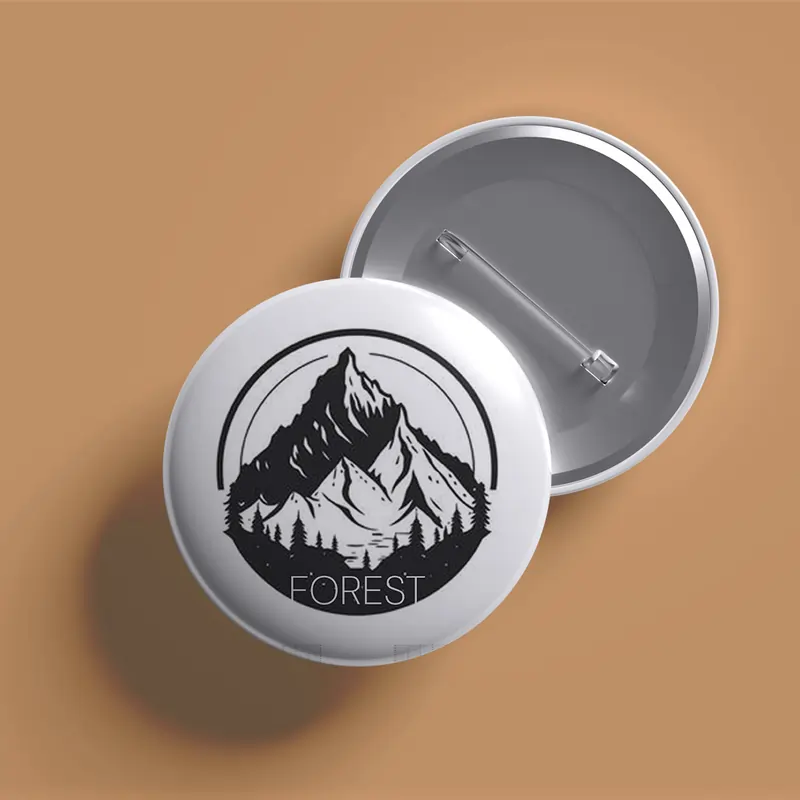
Custom Button Badges

Custom Door Hangers

Custom Printed Placemats
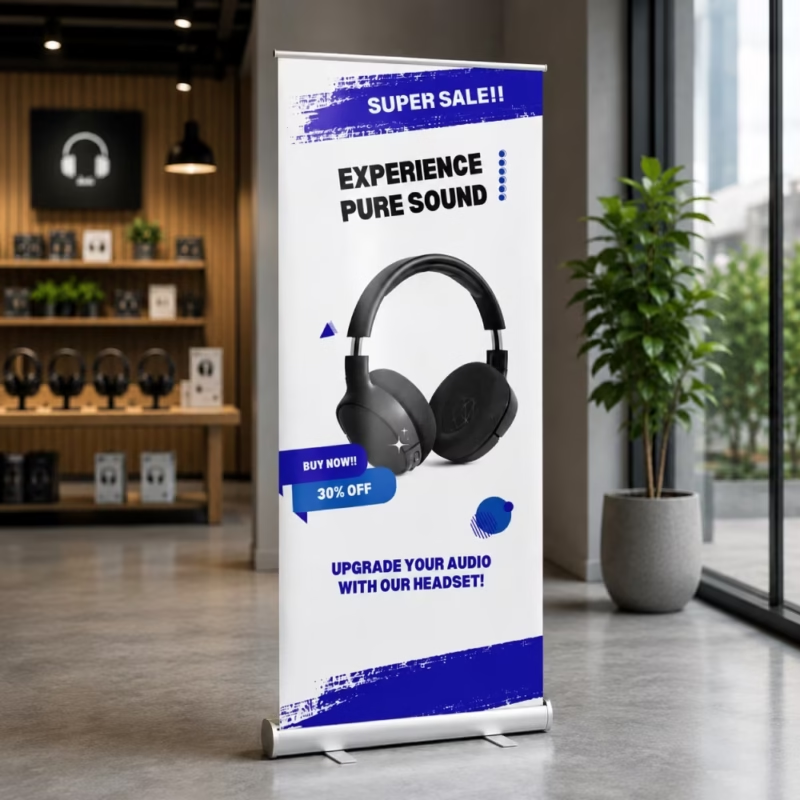
Custom Roll Up Standees
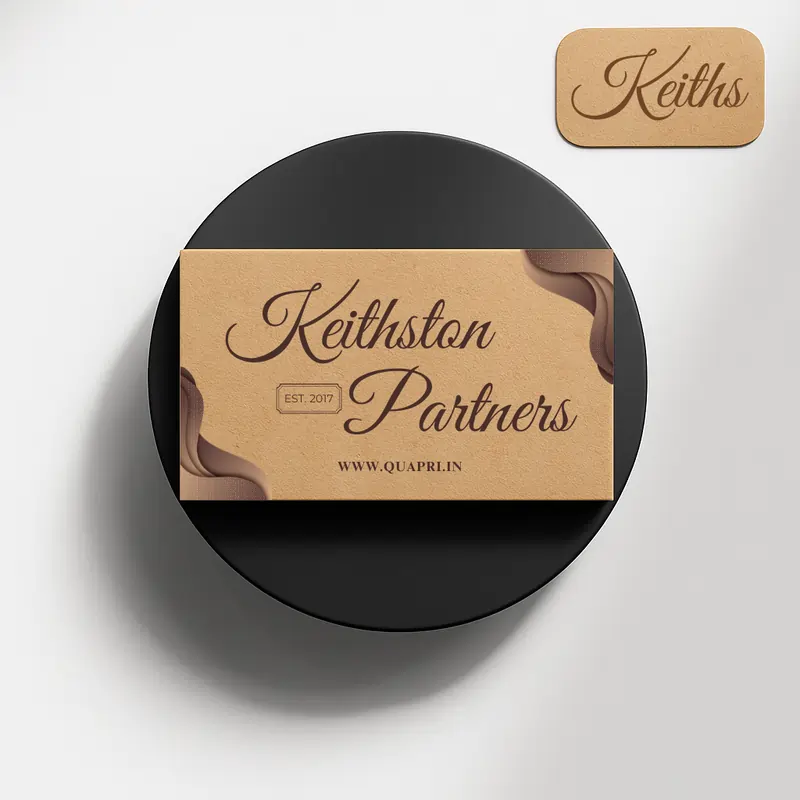
Eco-Friendly Business Card
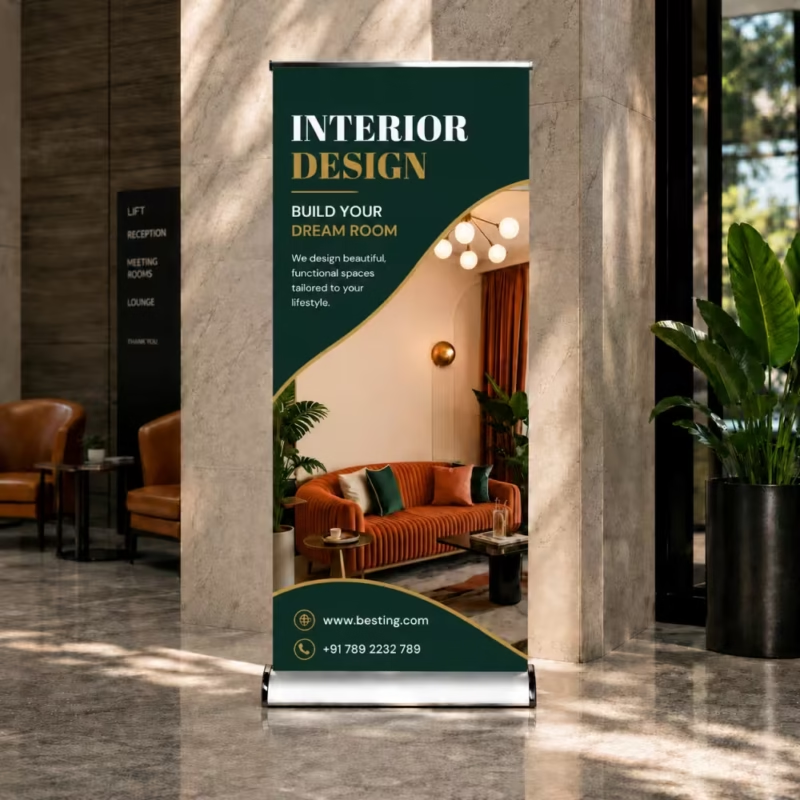
Luxury Roll Up Standee

Metallic Finish Business Cards
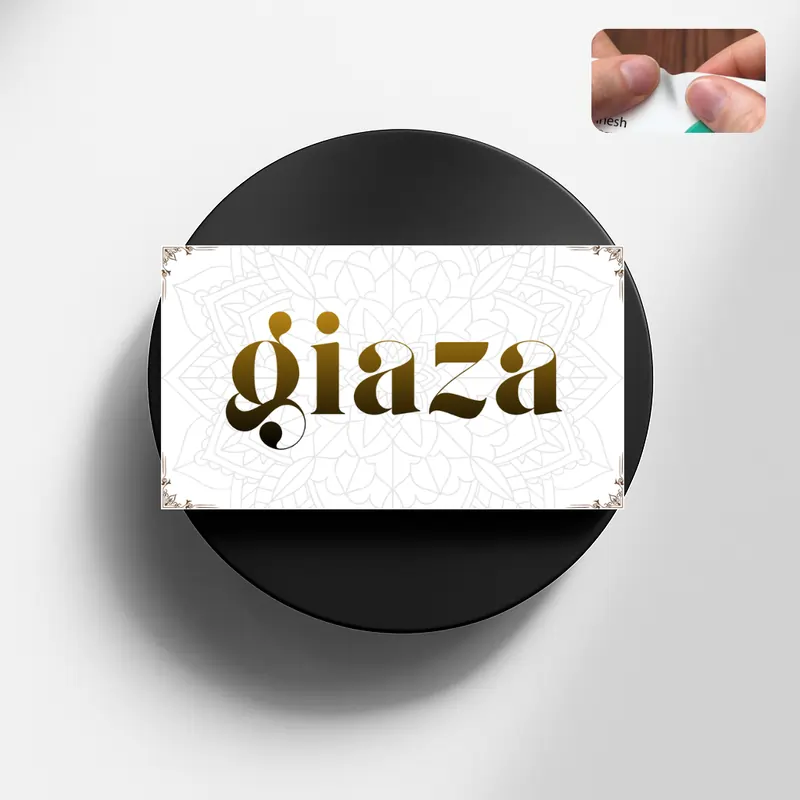
Non-Tearable Visiting Cards
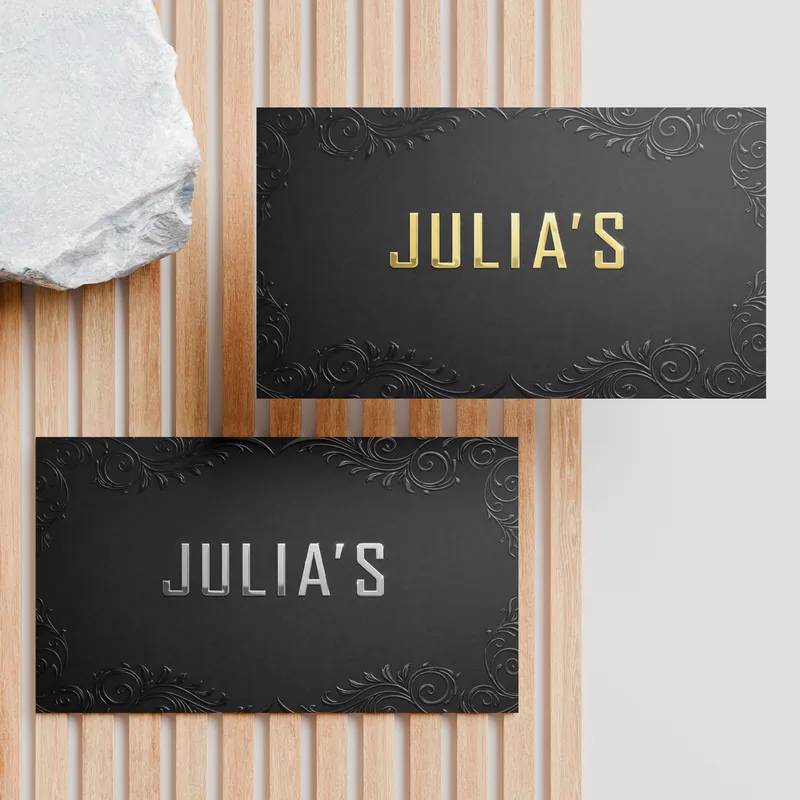
Premium Visiting Cards
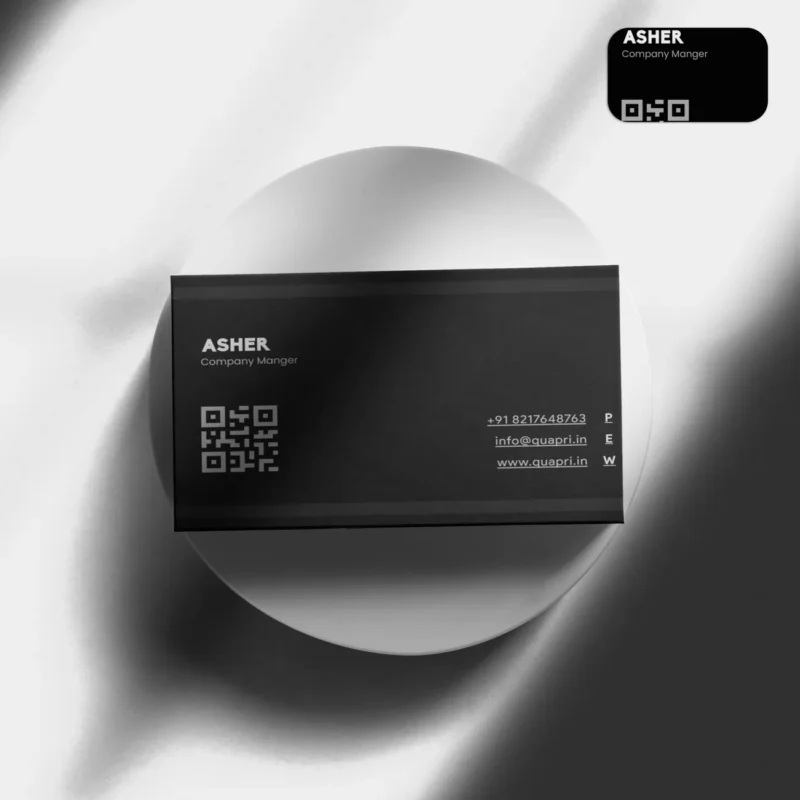
QR Code Business Cards