



Articles•17 October 2026
Brochure vs Flyer: What’s the Difference and Which Should You Use?
Brochure vs Flyer: What’s the Difference and Which Should You Use? Businesses use printed marketing materials to promote products, share

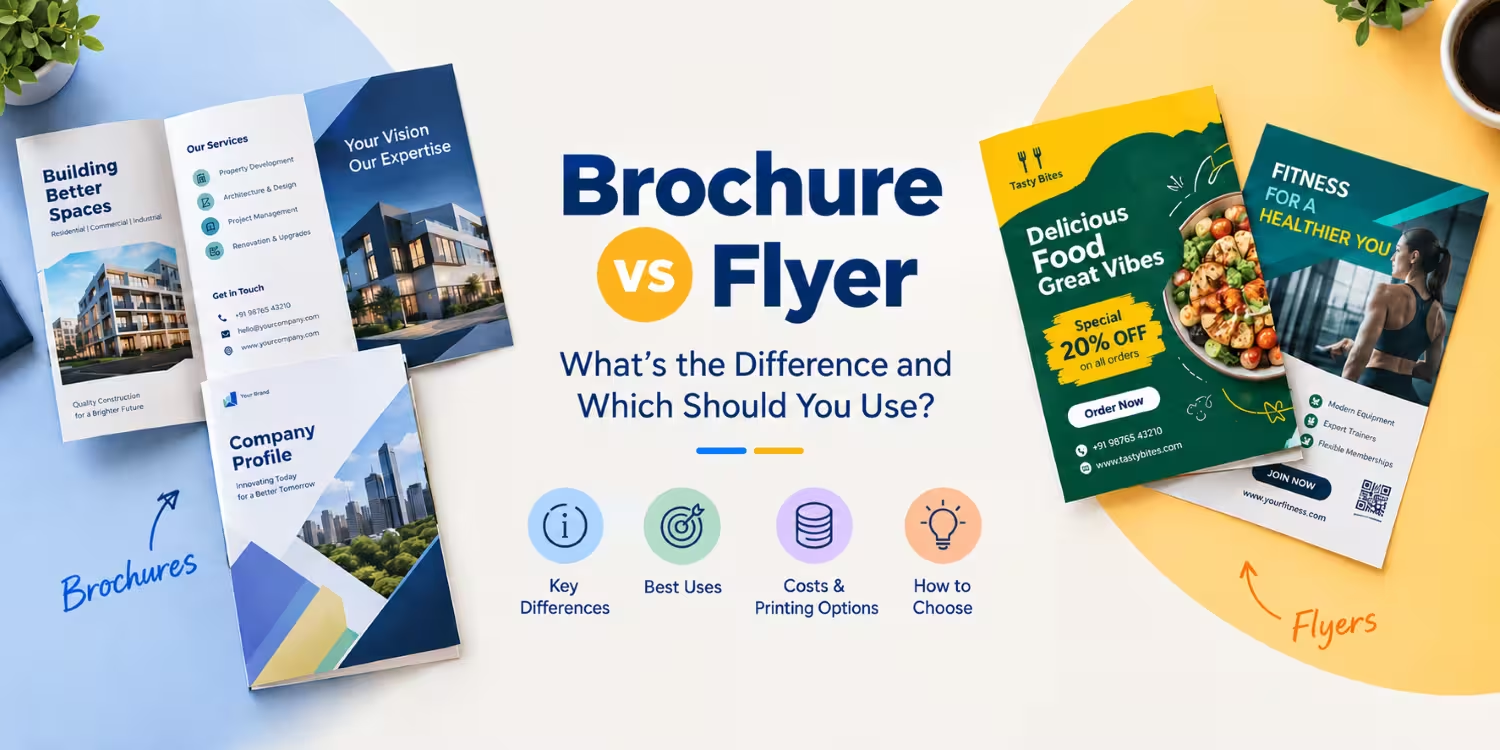
Businesses use printed marketing materials to promote products, share information, announce offers, and connect with potential customers. Two common choices are brochures and flyers. Both are useful for marketing, but they work in different ways. Understanding brochure vs flyer differences can help you choose the right option for your business. A flyer is usually a single sheet that gets your message across quickly, while a brochure gives you more space to explain your products, services, and business in detail.
So, which one should you choose for your next campaign? It depends on what you want to promote, how much information you need to share, who you want to reach, and how much you plan to spend. In this guide, we'll compare brochures and flyers, look at how businesses use them, explore printing options, and help you decide which works best for your needs.
What Is a Brochure?
A brochure is a printed marketing material that helps you share detailed information about your business, products, services, or organisation. It can be a single sheet folded into multiple panels or a booklet with several pages. Since brochures offer more space, you can explain what you offer, highlight key features, share product details, and help potential customers decide what to do next.
For example, a real estate company can use a brochure to showcase properties, floor plans, amenities, and contact details. A college can use one to introduce its courses, campus facilities, and admission process. This makes brochures a useful choice when you want to give people more information in one place.

Common Types of Brochures
- Bi-fold brochure: This brochure is folded once to create four panels. It's a good choice for introducing your company, explaining your services, or sharing product information.
- Tri-fold brochure: This brochure is folded into three sections, creating six panels. It helps you organise information into easy-to-follow sections, such as services, benefits, and contact details.
- Z-fold brochure: This brochure folds back and forth in a zigzag pattern. It's useful when you want to present information in a particular order, guiding readers from one section to the next.
- Gate-fold brochure: This brochure has two side panels that fold inward to meet in the centre, opening like a pair of gates. It's a great option for product launches, premium product presentations, real estate promotions, or designs with a large central image or key message.
- Roll-fold brochure: This brochure has panels that fold inward one after another, with each panel wrapping over the previous one. It's useful for sharing information step by step, such as product details, service offerings, travel itineraries, or company information.
- Booklet brochure: This brochure contains multiple pages joined together through binding. It's ideal for company profiles, product catalogues, and detailed service presentations.
The right brochure format depends on how much information you want to share, the design you're looking for, and how you want readers to move through the content.

When Should You Use a Brochure?
A brochure is a good choice when your audience needs more details before making a decision. It gives you enough space to explain what you offer, highlight important features, and share useful information without making everything feel crowded.
Here are some common ways businesses use brochures:
- Company profiles and corporate presentations
- Product catalogues and service descriptions
- Real estate property details
- Educational institution and course information
- Healthcare services and hospital information
- Travel packages and hotel services
- Trade shows, exhibitions, and business meetings
Brochures are especially useful for B2B marketing. Potential clients often need time to review service details, compare different options, or discuss them with their teams before contacting a supplier. A well-organised brochure makes it easier for them to understand your offerings and make an informed decision.
What Is a Flyer?
A flyer is a single-sheet printed marketing material that helps you get your message across quickly. It usually includes a headline, a short description, relevant visuals, and a call to action to encourage readers to take the next step. Flyers can be printed on one side or both sides, depending on how much information you want to include. A single-sided flyer is ideal for highlighting one main message, while a double-sided flyer gives you extra space for product details, contact information, or promotional terms.
For example, a restaurant can use flyers to announce a new menu, while a retail store can hand them out to promote a seasonal sale.

Common Types of Flyers
- Promotional flyers: Highlight discounts, product launches, special offers, and seasonal campaigns.
- Event flyers: Share details about exhibitions, workshops, conferences, concerts, and public events.
- Business flyers: Introduce a company, advertise a service, or generate customer enquiries.
- Product flyers: Highlight product features, benefits, specifications, and important selling points.
- Informational flyers: Share announcements, instructions, or community information.
When Should You Use a Flyer?
Flyers are a great choice when you want to reach a large audience and share your message quickly. They're especially useful for local promotions and campaigns where people should be able to understand your offer at a glance.
Here are some common ways businesses use flyers:
- Retail promotions and discount announcements
- Restaurant offers and new menu launches
- Local business advertising
- Event invitations and announcements
- Product launches and new service promotions
- Real estate project announcements
- Trade fair and exhibition promotions
For small businesses, flyers are a simple and practical way to promote an offer or service without spending on a more detailed printed document. You can focus on the main message, highlight what matters most, and make it easy for potential customers to take action.
Brochure vs Flyer: What Is the Difference?
The main difference between a brochure and a flyer is the amount of information each format is designed to communicate. A flyer focuses on a short, attention-grabbing message, whereas a brochure provides more detailed information about a business, product, or service.
| Feature | Brochure | Flyer |
|---|---|---|
| Main purpose | Explain products, services, or a business in detail | Promote an offer, event, product, or service quickly |
| Format | Usually folded or made into a multi-page document | Usually a single, flat sheet |
| Content | Detailed descriptions, features, benefits, and supporting information | Short text, key benefits, and a clear call to action |
| Design | Organised into panels or pages | Usually centred on one main message |
| Common sizes | A4, A5, and custom folded formats | A4, A5, A6, and custom sizes |
| Printing | Single-sided or double-sided, depending on the format | Single-sided or double-sided |
| Distribution | Sales meetings, reception desks, exhibitions, and customer visits | Handouts, local distribution, counters, and events |
| Best suited for | Detailed information and considered purchasing decisions | Quick promotions and awareness campaigns |
| Typical lifespan | Often retained for future reference | Often used for short-term campaigns, but can be kept for later |
| Cost considerations | Depends on folds, page count, paper, and finishing | Depends on paper, quantity, size, and printing specifications |
For example, a company introducing its complete range of printing services may benefit from a brochure, while a business promoting a limited-period offer may get better results from a flyer.
Neither format is automatically better than the other. The right choice depends on what you want your audience to learn or do.
Brochure vs Flyer: Which Is More Cost-Effective?
The cost of brochures and flyers depends on a few things, including print quantity, paper quality, size, colour coverage, finishing, and design requirements.
Flyers are often a budget-friendly option when you need a large number of simple promotional sheets. Their straightforward format makes them a good choice for sharing your message with a wide audience.
Brochures may cost more per piece because folding, extra pages, thicker paper, or special finishing can add to the production cost. However, they're worth considering when customers need more details before contacting your business or buying a product.
Here are a few things to consider before choosing:
- Quantity: Printing more copies can lower the cost per copy, depending on the printing method and order specifications.
- Paper quality: The thickness and finish of the paper affect both the price and the final look.
- Size and format: A standard flat sheet may be simpler to print than a folded or multi-page brochure.
- Finishing: Options such as folding, binding, and lamination can increase the overall cost.
- Campaign purpose: A flyer may work well for a short promotion, while a brochure may be more useful for sales meetings and product presentations.
To compare prices fairly, ask for quotations for both formats using the same paper specifications and print quantity wherever possible. Keep in mind that a flyer isn't always cheaper in every situation. The final cost depends on your requirements and the printing specifications you choose.
Brochure vs Flyer: Which Is Better for Your Business?
Choosing between a brochure and a flyer depends on what you want to promote, who you're trying to reach, and how you plan to distribute your marketing materials.
1. For Local Marketing and Promotions
Recommended: Flyer
Flyers are a good choice for local advertising because they get your message across quickly. Retail shops, restaurants, salons, and service providers can use them to announce offers, share contact details, or promote a new location.
For example, a restaurant opening a new branch can distribute flyers with its address, opening date, menu highlights, and a clear call to action. People can quickly understand the offer without reading through several sections.
2. For Product and Service Presentations
Recommended: Brochure
A brochure works better when potential customers need more information before making a decision.
For example, a printing company can use a brochure to showcase its printing services, available materials, customisation options, and business applications. This helps customers understand what the company offers and decide whether its services meet their needs.
3. For Trade Shows and Exhibitions
Recommended: Both
Brochures and flyers can work well together at trade shows and exhibitions.
Use flyers to catch visitors' attention with a short message, highlight a key product, or promote a special offer. You can then share brochures with visitors who want to learn more about your products, services, or business.
For example, a manufacturer can use a flyer to highlight a featured product and offer a brochure with its specifications, applications, and available configurations. This helps attract interest and supports more detailed sales conversations.
4. For Educational Institutions
Recommended: Brochure for detailed information; flyer for announcements
Schools, colleges, and training centres can use brochures to explain their courses, admission requirements, facilities, and placement support.
Flyers are more suitable for announcing admission deadlines, open days, seminars, or workshops. For example, a college can distribute flyers to promote an open day and give brochures to visitors who want to explore the courses in more detail.
5. For Real Estate Marketing
Recommended: Both, depending on the objective
A flyer can help introduce a new property project by highlighting its location, key amenities, and contact details. A brochure gives potential buyers more space to explore floor plans, property specifications, amenities, and available configurations.
Buying property usually involves careful consideration, so a brochure can be useful for buyers who want to review the details after their first conversation with the sales team.
How to Choose Between a Brochure and a Flyer
Before placing a print order, think about these five factors to help you choose the right option for your business.
1. How Much Information Do You Need to Share?
If you only need to share a headline, a few benefits, and your contact information, a flyer may be all you need.
But if you want to explain multiple services, product specifications, features, or processes, a brochure gives you more space to organise everything clearly.
Think about the questions your audience might have. If they need detailed answers before making a decision, a brochure could be the better choice.
2. What Is Your Main Marketing Goal?
Choose a flyer when you want to grab attention quickly, promote an offer, announce an event, or encourage people to take immediate action.
A brochure is a better fit when you want to explain your offerings, help potential customers understand your products or services, or support a sales conversation.
For example, announcing a new store opening requires a different approach from presenting a complete range of corporate gifting products to a procurement manager.
3. Who Is Your Target Audience?
Think about who will receive your printed material and what they need to know.
A flyer handed out to shoppers should communicate its main message at a glance. On the other hand, a brochure shared with a procurement manager during a business meeting can provide the detailed information they need to evaluate your offerings.
If your audience needs more information before making a decision, a brochure may be more useful.
4. Where Will You Distribute the Material?
Your distribution method can also help you decide.
Flyers are easy to hand out during local campaigns, place on counters, display on noticeboards, or distribute at events. Brochures work well at reception desks, exhibitions, sales meetings, and customer consultations.
Consider where people will see your material, how much time they'll have to read it, and whether they'll want to keep it for later.
5. What Is Your Budget?
Start by deciding how much you want to spend and how many copies you need. When comparing printing quotes, look at the size, paper quality, colour, finishing, and quantity rather than just the price per sheet.
A simple flyer may be enough for a large-scale promotional campaign. A brochure, however, may offer more value when you need to explain your products or services in detail and support important sales discussions.
Paper, Size, and Printing Options for Brochures and Flyers
Choosing the right format is important, but don't overlook the paper and print quality. They affect how your marketing material looks, feels, and presents your business to potential customers.
Popular Flyer Sizes
- A4 flyers: A good choice for detailed promotions, service information, menus, and event announcements. The larger space lets you include text, images, and contact details without making the design feel crowded.
- A5 flyers: Ideal for promotional handouts, retail offers, and local advertising. They provide enough room for a clear message while being easy to carry and distribute.
- A6 flyers: Small and easy to carry, these flyers work well for short promotional messages, invitations, and announcements.
- Custom-size flyers: If standard sizes don't suit your campaign, custom-size flyers let you create a layout that fits your design and marketing needs.
Popular Brochure Formats
- A4 tri-fold brochures: A practical option for presenting multiple services or dividing information into clear, easy-to-follow sections.
- A4 bi-fold brochures: Work well for company introductions, business presentations, and product overviews.
- A5 brochures: Compact and easy to distribute, these brochures are useful for handouts and reception areas while still providing space for essential details.
- Multi-page brochures: Ideal for company profiles, product catalogues, and detailed service presentations that need more space.
A4 and A5 are common sizes, but remember that a brochure's final dimensions can change after folding. For example, an A4 sheet folded into thirds creates a compact brochure with six panels.
Choosing Paper and Finish
The paper you choose should suit your budget, design, and how you plan to use the printed material. Standard paper stocks are suitable for everyday distribution, while thicker paper can give your brochures or flyers a more substantial feel.
Glossy paper helps colourful images and promotional graphics stand out. Matte paper has a less reflective finish, making it a good choice for text-heavy designs and professional presentations.
The right specifications depend on your design and printing needs. Before placing an order, check the available paper options, folding requirements, print quality, and finishing services to make sure the final result matches your expectations.
Design Tips for Effective Brochures and Flyers
A well-designed print material should make the message easy to understand and the next step clear. Although both formats need good design, their layouts should reflect their different purposes.
Design Tips for Flyers
- Use a clear headline: Communicate the main benefit or offer immediately.
- Keep the copy short: Focus on one primary message instead of including too much information.
- Choose relevant images: Use visuals that support the offer or campaign.
- Highlight important details: Make dates, prices, locations, and contact information easy to find.
- Include a clear call to action: Encourage readers to visit a store, scan a QR code, register for an event, or contact your team.
Design Tips for Brochures
- Organise information into sections: Use panels or pages to separate products, services, features, and contact details.
- Use descriptive headings: Help readers find the information they need.
- Highlight key benefits: Explain how your offerings address customer needs.
- Maintain consistent branding: Use consistent fonts, colours, and visual elements throughout.
- Include a clear next step: Add contact details, a relevant website address, or a QR code.
For both formats, proofread the content before printing. Check phone numbers, website addresses, spelling, image quality, and QR code functionality to avoid costly reprints.
Can You Use Brochures and Flyers Together?
Yes! Using brochures and flyers together helps businesses attract attention and share detailed information.
- Flyers: Grab attention with a short message, special offer, or product highlight.
- Brochures: Provide detailed information about products, services, features, and benefits.
- QR codes: Connect printed materials to product pages, digital catalogues, or enquiry forms.
Example: At a trade show, distribute flyers to attract visitors and offer brochures to those who want to learn more about your products.
Tip: Give each format a clear purpose. Use flyers to create interest and brochures to provide more information. Before printing, check that any QR code is easy to scan and works correctly.
Brochure vs Flyer: Which Should You Choose?
Choose a flyer for quick promotions, event announcements, and reaching a wider audience. Choose a brochure when you need to share detailed product information, explain your services, or support sales discussions.
If you need both awareness and detailed information, use flyers to attract attention and brochures to help customers learn more.
Get Your Business Printing Done with Quapri
Quapri is an Indian custom printing and personalised gifting company serving businesses of all sizes. We provide customised printing solutions for corporate branding, promotional campaigns, events, and everyday business needs. From single-piece orders to bulk printing, we offer flexible quantities and customisation options. Our in-house printing and pan-India delivery help businesses bring their branding ideas to life.
Need brochure or flyer printing for your business? Contact Quapri for customised brochure and flyer printing solutions. Explore quapricatalogue to discover more printing products for your business.