



How to Choose the Right Printing Partner for Your Business
How to Choose the Right Printing Partner for Your Business If you’re wondering how to choose the right printing company

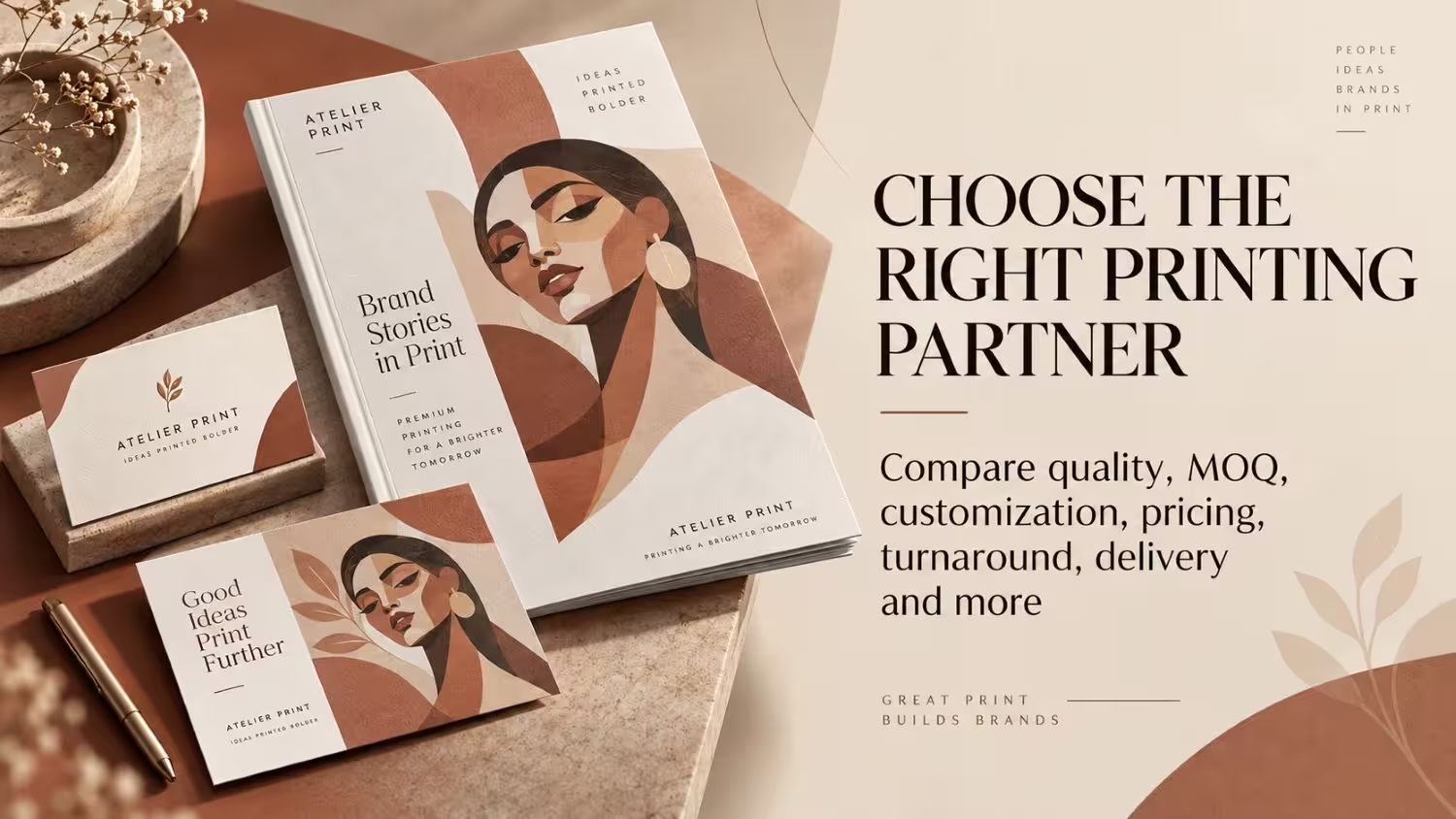
If you're wondering how to choose the right printing company for your business, don't base your decision on price alone. Quality, minimum order quantity, customization, turnaround time, delivery, and repeat-order consistency can all affect whether a printer is the right fit for your business. Whether you need business cards, brochures, packaging, stickers, stationery, event materials, promotional products, or corporate gifts, choosing the right printing partner can help you maintain quality, manage costs, and make future orders easier.
In this guide, we'll cover the key factors to compare before choosing a printing company for your business.
Start With Your Printing Requirements
Before you start comparing printing companies, first get clear on what you actually need. Think about:
- What products do you need?
- How many do you need?
- Is it a one-time order or something you’ll need regularly?
- Do you need custom branding or standard printing?
- When do you need the order?
- Where should it be delivered?
For example, ordering 100 visiting cards is very different from ordering branded packaging for multiple locations.
Once you know your requirements, it becomes much easier to compare printing companies based on the things that actually matter to your order.
2. Check the Minimum Order Quantity
Minimum order quantity (MOQ) is something worth checking before you place an order. Some printing companies mainly handle bulk orders, while others are more flexible with smaller quantities.
If you’re a startup, small business, agency, or testing a new product, a high MOQ can leave you with more stock than you actually need.
Choose a printing company that can handle the quantity you need now and still support larger orders as your requirements grow.
Low MOQ printing can be helpful when:
- You’re trying out a new design
- Your branding changes often
- You need printing for a small event
- You’re launching a new business
- You want to avoid keeping extra stock
3. Evaluate Print Quality
Price is important, but good print quality matters too. Poor-quality printing can make your business materials look unprofessional and affect how people see your brand.
Before choosing a printer, check things like:
- Paper or material quality
- Colour accuracy
- Print sharpness
- Finishing
- Durability
- Cutting and alignment
- How the finished products are packed
If you’re placing a large order, ask for samples first whenever possible. You can check the actual print quality, material and finishing before committing to the full order.
This is especially important for branded materials. Your logo, colours and designs should look consistent across different products and orders.
4. Compare Customization Options
Sometimes, standard printing options just don’t fit what your business needs. You may want a different size, material, colour, finish, shape, branding position, or packaging style. That’s where customization can make a big difference.
Before choosing a printer, ask:
- Can the size or format be customized?
- Can you choose where the branding appears?
- Are different materials available?
- Can you provide your own artwork or design?
- What custom finishes are available?
- Can the same design be adapted for different products?
A good printing partner should understand what you’re trying to achieve and suggest options that fit your requirements, rather than simply asking you to choose from a fixed catalogue.
5. Compare the Total Cost, Not Just the Unit Price
When comparing printing companies, don’t just look at the price per piece. A lower unit price may not always mean you’re getting the better overall deal.
Check what’s included in the final cost:
- Product price
- Printing charges
- Customization costs
- Finishing charges
- Artwork or setup fees
- Packaging
- Delivery
- Reprint or replacement policies
Sometimes, paying a little more per piece can make sense if you get better quality, more customization options, or a more reliable delivery process.
To make a fair comparison, ask each printer for a detailed quotation based on the same requirements. This makes it easier to see what you’re actually paying for and avoid unexpected costs later.


6. Check the Turnaround Time
Good print quality is important, but timing matters just as much. There’s no point in getting great-looking materials if they arrive after your event, campaign, or product launch.
Before placing an order, ask about:
- Standard production time
- Rush or urgent orders
- Artwork approval time
- Dispatch time
- Expected delivery time
- What happens if there’s a production delay
Don’t choose a printer just because they promise the fastest delivery. Instead, look for a company that gives you a realistic timeline and can consistently deliver within it.
7. Consider Delivery and Fulfilment
Delivery can become a bigger challenge when your business operates across multiple cities. If you need printed materials sent to different offices, branches, events, or customers, check whether the printer can manage multiple delivery locations.
A good printing partner should make fulfilment easier, not add more coordination to your workload. If your business operates across India, choosing a printer with Pan-India fulfilment can also save you from coordinating with different local printers in each city.
8. Look at Repeat-Order Consistency
Your first order might look perfect, but what happens when you place the same order again a few months later?
This matters if your business regularly orders things like:
- Business cards
- Letterheads
- Packaging
- Stickers and labels
- Promotional materials
- Calendars
- Corporate gifts
- Event branding materials
You want the same colours, materials, finishing, and specifications each time so your brand looks consistent across all your materials.
If you place repeat orders, ask the printer how they keep track of your previous specifications and artwork. This can make future orders much easier and help you get consistent results each time.
9. Check Artwork and Proofing Support
A small artwork mistake can become a costly problem, especially when you’re placing a bulk order. So, before choosing a printer, check how they handle your artwork before it goes into production.
Ask about:
- Which file formats they accept
- The recommended image resolution
- Whether they check artwork before printing
- How you approve the final proof
- Who confirms the design before production
Different products may have different file and colour requirements, so it helps to know what the printer expects from you.
A clear proofing process gives you a chance to catch issues like spelling mistakes, incorrect sizes, colours, or design changes before anything is printed.
10. Test Before Placing a Large Order
If you’re trying a new printing company, you don’t have to start with a large order right away. When possible, begin with a smaller order and see how the overall experience goes.
Pay attention to:
- Print quality
- Communication
- Packaging
- Delivery
- Order accuracy
- Customer support
- Consistency
This gives you a better idea of what to expect before committing to larger or recurring orders. If everything goes smoothly, you can gradually move more of your printing requirements to the same supplier.
11. Look at Customer Support
Printing isn’t always as simple as uploading a file and placing an order. You may have questions about materials, sizes, quantities, artwork, finishing, delivery, or which product would work best for your needs.
That’s why responsive customer support can make a real difference, especially when you’re placing a custom or bulk order.
For business orders, it can be helpful to have someone you can speak to who understands your requirements and can guide you through the process instead of relying only on an automated ordering system.

12. Check What Happens if Something Goes Wrong
Even with a good printing process, things can occasionally go wrong. Before placing an important order, it’s worth knowing how the printer handles issues such as:
- Damaged products
- Printing errors
- Incorrect quantities
- Production problems
- Reprints
- Replacements
Ask about their policy before placing the order, so you know what to expect if there’s a genuine production issue. A reliable supplier should have a clear process for resolving problems and helping you get the order back on track.
13. Consider the Range of Products
Your printing needs can change as your business grows. You might start with visiting cards and stationery, then later need packaging, stickers, event materials, promotional products, calendars, diaries, or corporate gifts.
That’s why it can be useful to choose a printing company that offers a wide range of products. Instead of searching for a new supplier every time you need something different, you may be able to manage several printing requirements with one trusted partner.
This can save you time, reduce vendor coordination, and make repeat orders easier to manage.
14. Think About Your Future Requirements
Your printing needs may change as your business grows, so it’s worth thinking beyond your current order. A printer that can support your future requirements can save you from searching for a new supplier every time your needs change.
For example:
- Startups may need small quantities, launch materials, packaging, and branding products.
- Small and medium businesses may need regular stationery, marketing materials, packaging, and promotional products.
- Corporate teams may need bulk printing, employee kits, event materials, and branded merchandise.
- E-commerce businesses may need packaging, labels, inserts, stickers, and promotional materials.
- Educational institutions may need certificates, stationery, event materials, merchandise, and promotional products.
- Agencies and event companies may need different customized products for multiple clients and campaigns.
Think about where your business is heading and whether the printing company can keep up with those changing requirements. This can make vendor management easier as your needs grow.
Local Printer vs Business Printing Partner
A local printer can be a good choice in certain situations.
Choose a local printer when:
- You need a simple product quickly
- You have a very small or urgent job
- You want to collect the order locally
- You need minimal customization
- Your requirement is specific to one location
A broader business printing partner may be a better fit when:
- You need customized products
- You need flexible or low quantities
- You place orders regularly
- You need multiple product categories
- You want consistent branding across products
- You need delivery to different locations
The goal isn't to find one printer that's best for every situation. It's to find a supplier that fits your specific requirements and can support the way your business works.
Don't Choose a Printer Based Only on Price
Price should be part of your decision, but it shouldn't be the only thing you look at. A cheaper supplier can end up costing you more if the quality is inconsistent, orders are delayed, products need to be reprinted, or you spend too much time managing the process.
Instead, compare the overall value you get across:
- Quality
- MOQ
- Customization
- Pricing
- Turnaround
- Delivery
- Support
- Consistency
- Product range
Looking at all these factors gives you a clearer picture of which company is the right fit for your business.
Questions to Ask Before Choosing a Printing Company
Before placing an order, it’s worth asking:
- What is your minimum order quantity?
- Can you handle customized requirements?
- What materials and finishes do you offer?
- How long does production usually take?
- Do you offer rush production?
- How do you handle artwork and proof approval?
- Can you maintain consistent quality for repeat orders?
- Can you deliver to multiple locations?
- What happens if there is a production error?
- Can you support other printing or branding needs as my business grows?
The answers to these questions can help you compare suppliers based on what your business actually needs.
Red Flags to Watch For
Be cautious if a printing supplier:
- Gives unclear pricing
- Avoids discussing specifications
- Can't clearly explain production timelines
- Doesn't provide clear artwork guidelines
- Is inconsistent with communication
- Can't explain how production errors are handled
- Offers extremely low prices without explaining what's included
- Doesn't have a clear process for repeat orders
A professional printing process should be clear and transparent, from the initial quotation to final delivery.
A Simple Framework for Choosing the Right Printer
If you're still unsure how to choose the right printing company, follow this simple process:
- Define what you need, including the product, quantity, customization, budget, and deadline.
- Shortlist companies that can meet those requirements.
- Compare their quality, MOQ, pricing, customization, turnaround, and delivery.
- Check samples or start with a smaller order where possible.
- See how well they communicate and support you throughout the process.
- Choose the supplier that offers the best overall fit, rather than simply going with the lowest price.
This approach works whether you're ordering 100 business cards or managing recurring branded materials for multiple locations.
Why Quapri Can Be a Strong Printing Partner for Your Business
Quapri is built for businesses that need customized printing and branded products, with flexible quantities, consistent quality, and fulfilment across India.
Businesses can use Quapri for requirements such as:
- Business cards and stationery
- Brochures and marketing materials
- Stickers and labels
- Packaging materials
- Calendars and diaries
- Corporate gifts
- Promotional products
- Event branding materials
Working with a broader printing and branding partner can make things easier when your requirements change. Instead of looking for a new supplier every time, you can manage different printing needs with one partner.
Whether you need a small customized order or regular business requirements, Quapri can help you find printing products and solutions that fit your quantity, branding, and application.
Looking for a Printing Partner?
If you're comparing printing companies in India for quality, customization, flexible quantities, and business needs, take a look at Quapri's range of printing and branded products. From everyday business stationery to packaging, promotional materials, corporate gifts, and event branding, Quapri can help you manage different requirements with one business-focused partner.
For more branding material options, visit our catalogue page.
Explore Quapri's printing and branded product range and find the right solution for your next business need.