DTF vs UV DTF: What Are the Differences and Which Should You Choose?
DTF vs UV DTF: What Are the Differences and Which Should You Choose?
Confused about DTF vs UV DTF and which printing m...





No categories found.
No products in the cart.
RETURN TO SHOP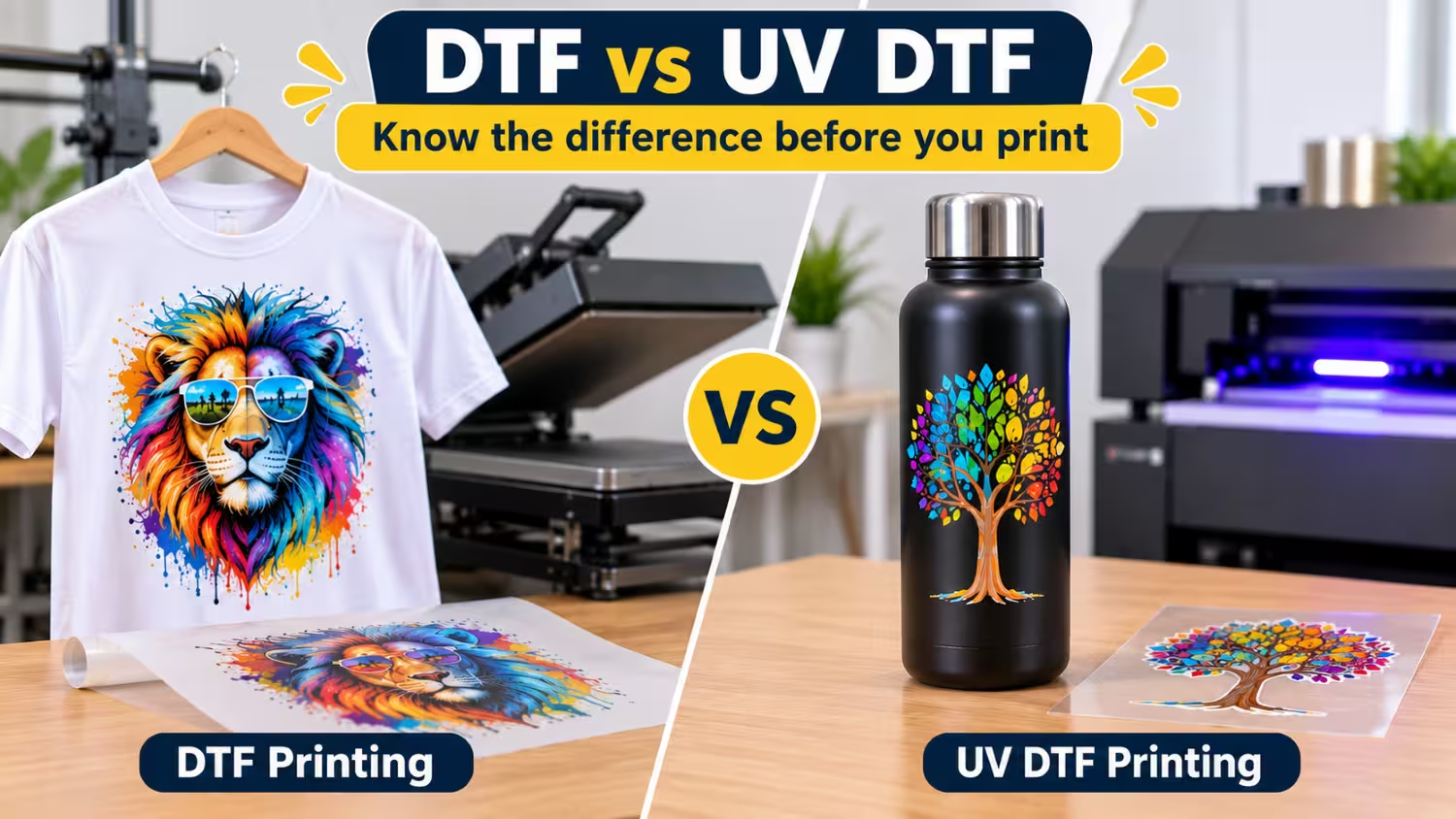
DTF vs UV DTF: What Are the Differences and Which Should You Choose? Confused about DTF vs UV DTF and

Confused about DTF vs UV DTF and which printing method to choose? Although both use transfer films, they are designed for different purposes. DTF printing is mainly used for fabric products like T-shirts, hoodies, and tote bags, while UV DTF printing is used to add designs to compatible hard surfaces such as glass, acrylic, and metal.
For example, if you want to print your company logo on employee T-shirts, DTF is usually the right choice. But if you want to add your brand logo to a compatible water bottle or acrylic gift, UV DTF may be a better option.
The key is understanding how these two methods differ, which materials they work with, and where each one performs best. Let's compare DTF and UV DTF to help you choose the right printing method for your needs.
| Feature | DTF Printing | UV DTF Printing |
|---|---|---|
| Full form | Direct-to-Film | Ultraviolet Direct-to-Film |
| Main purpose | Printing designs on fabric | Applying designs to compatible hard surfaces |
| Ink type | Typically water-based textile pigment inks | UV-curable inks |
| Transfer material | Special textile transfer film | Specialised transfer film system, commonly using A and B films |
| Application method | Heat and pressure using a heat press | Pressure-based application without a conventional heat press |
| Suitable materials | Cotton, polyester, and compatible fabric blends | Compatible glass, acrylic, metal, and selected plastics |
| Common products | T-shirts, hoodies, uniforms, and tote bags | Bottles, tumblers, jars, acrylic gifts, and promotional products |
| Adhesion method | Heat-activated adhesive bonds the design to fabric | Adhesive film transfers the cured design onto the surface |
| Typical finish | Flexible printed design on fabric | Decorative design that may have a glossy or raised appearance |
| Main limitation | Requires suitable heat-transfer settings and fabric compatibility | Adhesion and durability vary by surface and application conditions |
| Best suited for | Custom apparel and fabric merchandise | Branding and decoration of compatible hard-surface products |
Quick answer: Choose DTF for compatible fabric products and UV DTF for compatible hard-surface products. Neither method is universally better; the right option depends on what you want to print on and how the finished product will be used.
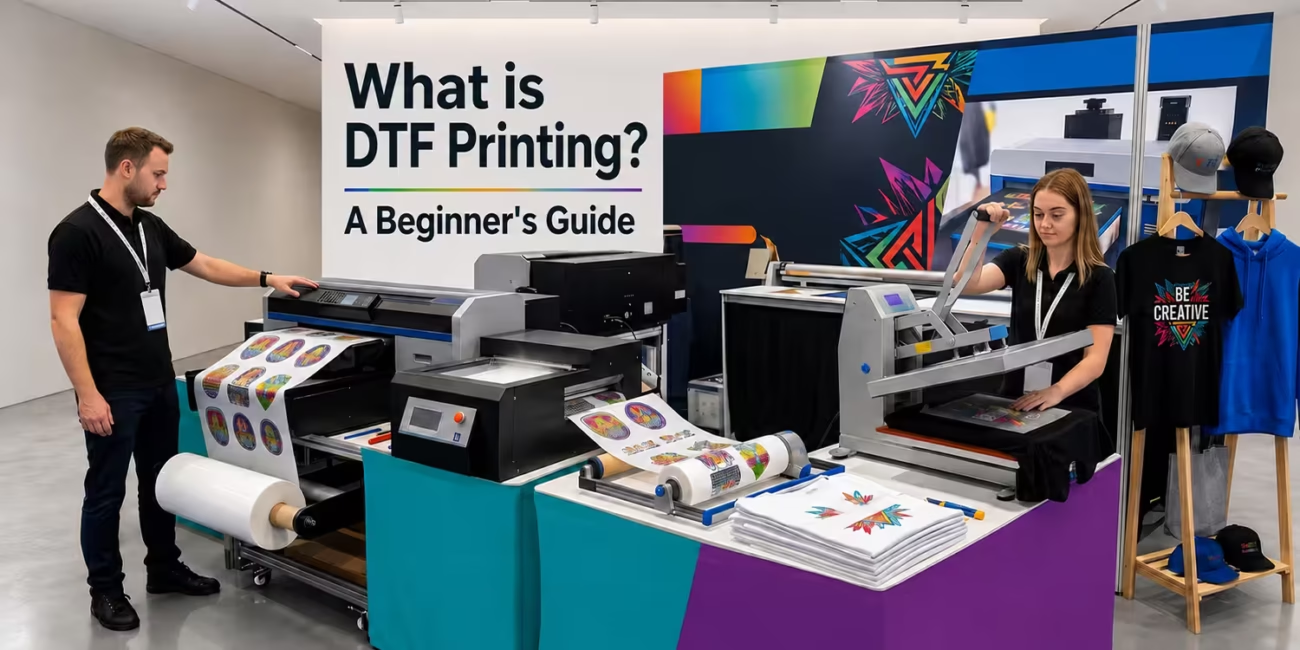
DTF stands for Direct-to-Film printing. In simple terms, it involves printing a design onto a special transfer film and then transferring it onto fabric using heat and pressure.
DTF printing is a popular choice for custom clothing because it can produce colourful designs, fine details, and multicoloured artwork. It's commonly used for printing company logos on T-shirts, creating uniforms, designing promotional clothing, and personalising tote bags.
So, how is it different from direct-to-garment (DTG) printing? DTG prints the design directly onto the fabric, whereas DTF prints it onto a film first and then transfers it to the garment. This makes DTF a useful option for businesses looking to customise a variety of fabric products.
DTF printing involves six main steps, from preparing your design to transferring it onto fabric. Here's how the process works:
The result? A custom-printed fabric product with a colourful, detailed design. The final quality and durability depend on the materials used, the type of fabric, and how correctly the transfer is applied.
One of the reasons DTF printing is popular is that it works with a variety of fabrics. Whether you're customising T-shirts for your team or creating branded tote bags, DTF can be a good option for many textile products.
Here are some common materials used for DTF printing:
Keep in mind that not every fabric handles heat in the same way. For example, some polyester garments may be sensitive to high temperatures, so the transfer settings may need to be adjusted.
Before printing, check the fabric's care instructions and the transfer manufacturer's recommendations to get the best possible results.
DTF printing is a great option when you want to add colourful designs, logos, or branding to fabric products. From employee uniforms to promotional merchandise, it can be used for a wide range of business and personal needs.
Here are some common uses of DTF printing:
For example: Imagine your company is organising a conference and needs 200 T-shirts printed with its logo and event name. DTF printing can be a suitable choice because it supports detailed, multicolour designs on compatible fabrics.
Want to learn more? Read our detailed guide to DTF printing to understand how it works, its benefits, and its common applications.

UV DTF stands for Ultraviolet Direct-to-Film printing. It uses special UV-curable inks and a transfer film to create colourful designs that can be applied to compatible hard surfaces.
Unlike regular DTF printing, which is mainly used for fabrics, UV DTF is designed for products such as bottles, acrylic items, glass, and metal. The design is printed onto a specialised film, prepared as a transfer, and then applied to a suitable surface using pressure and an adhesive layer. You don't need a conventional heat press to apply the transfer.
UV DTF is a useful option for businesses that want to add logos, decorative designs, or personalised branding to promotional products, corporate gifts, and other compatible hard-surface items.
UV DTF printing involves a few steps to turn a digital design into a decorative transfer for compatible hard surfaces. Here's how the process works:
The result? You get a colourful, detailed design that adds a personalised touch to compatible hard-surface products without needing a conventional heat press.
Keep in mind that each UV DTF machine and transfer system may use a slightly different process, so always follow the supplier's application instructions.
UV DTF printing is a good option for adding designs to compatible hard-surface products. It's commonly used for branding bottles, decorating gifts, and personalising promotional items. Smooth surfaces generally provide better contact for the transfer adhesive.
Here are some materials that may work with UV DTF transfers:
However, just because a product is made from one of these materials doesn't mean a UV DTF transfer will stick properly. The surface finish, texture, coating, and adhesive compatibility all affect the result.
For example, a transfer may adhere well to a smooth metal bottle but struggle to stick to a rough or textured surface.
Before placing a bulk order, test the transfer on the actual product. This helps you check adhesion and finish before printing on a large quantity. Avoid assuming that every plastic, silicone, or flexible surface is suitable for UV DTF printing.
UV DTF printing is useful when you want to add logos, names, or decorative designs to compatible hard-surface products. It's a popular option to consider for personalised gifts, promotional items, and business branding.
Here are some common uses of UV DTF printing:
For example: Imagine your company is preparing 100 gift sets for clients and wants to add its logo to acrylic gifts and glass bottles. UV DTF printing may be a suitable option, provided the product surfaces are compatible with the transfers.
One important thing to remember: If you're decorating bottles or mugs, keep the transfer away from drinking rims and food-contact areas unless the complete product and decoration system are specifically approved for that use.

Choosing between DTF and UV DTF depends on what you want to print on. DTF works best for fabric products, while UV DTF is more suitable for compatible hard surfaces. Let's look at which method works better for different products.
DTF is generally the better choice for T-shirts and hoodies. Since these products use fabric, you need a printing method that can handle regular movement and wear. DTF lets you transfer colourful designs, company logos, and detailed artwork onto compatible garments.
You can use DTF printing for:
UV DTF stickers aren't designed for clothing. Their printed layer cannot handle the stretching and repeated washing that garments go through. If you want to print a design on a T-shirt or hoodie, DTF is the more suitable option.
UV DTF can be a good choice for bottles and tumblers with compatible surfaces. Businesses often use UV DTF to add company logos, employee names, or decorative designs to promotional drinkware. It can give a plain bottle or tumbler a personalised look without requiring a conventional heat press to apply the transfer.
Before choosing UV DTF, check a few things:
Keep in mind that UV DTF transfers aren't automatically dishwasher-safe or suitable for prolonged soaking. Always check the manufacturer's recommendations before using them on everyday drinkware.
UV DTF can work well for decorating compatible mugs, but the right choice depends on how people will use them.
For example, a decorative mug kept on a desk may not need to withstand the same conditions as a mug someone uses every day for hot drinks. Consider the mug's material, surface coating, washing requirements, and exposure to heat before choosing a transfer.
If you want to personalise mugs for corporate gifts, check that the surface supports UV DTF and that the transfer suits the intended use.
One important point: Keep decorative transfers away from the drinking rim and food-contact surfaces. Don't assume that a UV DTF transfer is microwave-safe or dishwasher-safe unless the manufacturer specifically confirms it.
DTF is generally the better option for compatible fabric tote bags and other textile merchandise. You can use it to print company logos, colourful illustrations, promotional messages, and event designs on suitable fabric products.
For example, imagine your company needs 500 branded tote bags for an exhibition. DTF could be a suitable option for printing your logo on compatible canvas bags. The final choice will depend on the fabric, design, order quantity, and production requirements.
UV DTF isn't designed to replace textile printing on ordinary fabric bags. Since it targets hard surfaces, it won't provide the same suitability for flexible materials.
UV DTF may be suitable for acrylic products and selected corporate gifts with compatible surfaces. Businesses can use it to add names, logos, and decorative designs to items such as:
For example, if you're preparing personalised gifts for employees or clients, you could use UV DTF to add your company logo to suitable acrylic items. This helps you create branded gifts without printing the design directly onto each product.
However, not all acrylic products have the same surface finish or coating. Check compatibility before applying transfers to a large batch. Testing one item first can help you confirm that the transfer adheres properly and gives you the finish you want.
Neither DTF nor UV DTF always lasts longer than the other. Each method works best for different products, and its durability depends on the materials you use, how you apply the transfer, and how you handle the finished product.
Several factors affect how long a DTF print lasts. The fabric, transfer materials, application process, and care routine all play a role in keeping the design looking good.
For example: If you wear a DTF-printed T-shirt regularly, follow the garment and transfer manufacturer's care instructions. Proper washing and drying can help keep the design looking good for longer.
Several factors determine how long a UV DTF transfer lasts. The surface you apply it to, how you prepare the product, and how you use and clean it can all affect the final result.
For example: A UV DTF-decorated bottle that someone uses and washes every day may experience more friction and wear than a decorative acrylic plaque that stays on a desk.
That's why you should consider how people will use the finished product rather than assume that a particular printing method will always last longer.
Wondering whether DTF or UV DTF printing costs less? The answer depends on the product, design, order quantity, and production requirements. Neither method is always cheaper, so it's important to compare the costs based on what you want to print.
Here are five factors to consider before making your choice.
Start by identifying the material you want to print on. DTF works best for compatible fabric products, while UV DTF suits compatible hard surfaces.
Choosing the wrong method can waste transfer materials, increase production costs, and affect the final result. Make sure the printing method matches your product before comparing prices.
The size and complexity of your design can affect the overall printing cost. Larger designs may use more transfer material, while detailed artwork may require additional printing time, depending on the equipment and process.
For example, printing a small company logo on a T-shirt may require fewer resources than printing a large, detailed design across the front.
The number of items you order can affect the cost per piece. Setup requirements, material usage, and production efficiency may all influence the final price.
For example, a business ordering 500 branded T-shirts may receive different per-piece pricing from a business ordering just 20. However, the actual savings depend on the printer's pricing structure and production requirements.
Each printing method has different equipment and application requirements, which can affect production costs.
DTF requires suitable heat-transfer equipment and the correct temperature, pressure, and pressing time. UV DTF uses specialised transfers that you apply to compatible hard surfaces with the appropriate preparation and pressure.
Consider these requirements when comparing the overall cost of each method, especially if you plan to handle the printing in-house.
Think about how people will use the finished product. A transfer that doesn't suit the material or intended use may wear out sooner, leading to replacement costs or additional work.
For example, UV DTF transfers don't work well on fabric T-shirts because they aren't designed to handle flexible textiles. Choosing DTF from the start helps you avoid wasting materials and money on an unsuitable method.
Practical tip: When requesting printing quotations, share the product type, material, design size, order quantity, and intended use. This helps you compare suitable options and understand the overall cost rather than choosing a method based on price alone.
Understanding what each printing method does well and where it falls short can help you choose the right option for your products.
Advantages
Limitations
Advantages
Limitations
The key is to choose the printing method that suits your product and how people will use it, rather than deciding based only on appearance or price.
Choosing between DTF and UV DTF becomes easier when you consider the product you want to customise. DTF works best for fabric products, while UV DTF suits compatible hard surfaces.
Quick tip: Identify the product material first, then check its surface compatibility and intended use. This will help you choose the right printing method and avoid spending money on a transfer that doesn't suit your product.
Before choosing DTF or UV DTF printing, take a moment to check your product requirements. These five questions can help you choose the right method and avoid unnecessary costs.
Start by identifying the material. Is it cotton, polyester, glass, acrylic, metal, plastic, or something else? DTF works best on compatible fabrics, while UV DTF suits compatible hard surfaces.
Check the product's surface finish, coating, and texture. Not every material supports UV DTF transfers, so follow the manufacturer's recommendations and test the transfer if needed.
Think about everyday use. Will the product go through frequent washing, stretching, heat exposure, or regular handling? Choose a printing method that suits these conditions.
Decide whether you want to print a design on fabric or add a decorative transfer to a hard surface. Your desired finish will help you narrow down the options.
Your order quantity can affect the price per piece, production planning, and overall cost. Share your required quantity when requesting a quotation so the printer can recommend a suitable option.
By answering these five questions before placing your order, you can choose a suitable printing method, avoid compatibility issues, and manage your budget more effectively.
DTF and UV DTF may sound similar, but they work differently. Choosing the wrong method or overlooking important details can affect the final result. Here are six common mistakes to avoid.
DTF and UV DTF serve different purposes. DTF works best on compatible fabrics, such as T-shirts, hoodies, and tote bags, while UV DTF suits compatible hard surfaces, such as glass, acrylic, and metal.
Before choosing a method, check the product material and make sure the transfer suits it.
Not every glass bottle, plastic case, metal item, or acrylic product will accept a UV DTF transfer equally well. The surface coating, texture, and finish can affect how well the adhesive sticks.
Check the manufacturer's recommendations and, where possible, test the transfer on the actual product before placing a bulk order.
UV DTF adds a printed design to the product's surface; it doesn't engrave the material itself. The design can still wear or become damaged through scratching, friction, heat, or unsuitable cleaning methods.
If you need a design that changes the surface of the material itself, consider whether engraving or another marking method better suits your requirements.
A transfer that resists water may not withstand a dishwasher. Dishwasher cycles expose products to heat, detergents, and repeated washing, which can affect the transfer's appearance and adhesion.
Always check the manufacturer's care instructions before using UV DTF transfers on everyday drinkware. Don't assume a transfer is dishwasher-safe unless the manufacturer confirms it.
Incorrect pressing settings and unsuitable washing methods can affect the appearance and durability of DTF prints. Frequent washing, high temperatures, and harsh detergents may also cause the design to wear out faster.
Follow the recommended application instructions and garment care guidelines to help your print last longer.
The cheapest transfer isn't always the most suitable option. A transfer that doesn't match your product material or intended use can lead to poor results and unnecessary costs.
Before comparing prices, consider the product material, design requirements, order quantity, expected finish, and how people will use the finished product.
The main takeaway: Choose DTF or UV DTF based on your product's material, surface compatibility, and intended use. This helps you get the right finish and avoid unnecessary expenses.
No, standard textile DTF transfers are not designed for ordinary hard bottle surfaces. UV DTF transfers are generally more suitable for compatible bottles.
No, UV DTF stickers are designed for hard surfaces, not flexible fabrics. Use textile DTF printing for T-shirts.
No, DTF uses textile inks and heat to transfer designs onto fabric, while UV DTF uses UV-curable inks and adhesive films for hard surfaces.
UV DTF stickers may resist water, but their performance depends on the transfer quality and application. They are not automatically dishwasher-safe.
No, UV DTF stickers are generally applied to compatible hard surfaces using pressure rather than a conventional heat press.
Neither is universally more durable. DTF durability depends on fabric and washing conditions, while UV DTF durability depends on surface adhesion and exposure to wear.
Yes, UV DTF transfers can be used on compatible mug surfaces, but dishwasher and microwave safety should not be assumed.
DTF is better for fabric products like T-shirts and hoodies, while UV DTF is better for decorating compatible hard surfaces like bottles, glass, and acrylic.
No, a standard DTF printer cannot directly perform UV DTF printing because the methods require different ink systems and printing equipment.
UV DTF transfers can last months or longer, depending on surface compatibility, application quality, handling, and exposure to water, heat, and friction.
Choosing the right printing method helps you get the finish you want for your products. Whether you need custom T-shirts for your team or branded items for corporate gifting, start by matching the printing method to your product material and intended use.
At Quapri, we offer custom printing and branding solutions to help businesses personalise products for their teams, events, and promotional activities.
Before placing an order, consider your product material, design, quantity, and how people will use the finished product. These details help you identify a suitable printing method for your needs.
Planning custom branding for your business? Contact Quapri to discuss your requirements and explore the right printing options for your products.
You can also explore our quapricatalogue to discover more product options for your business.